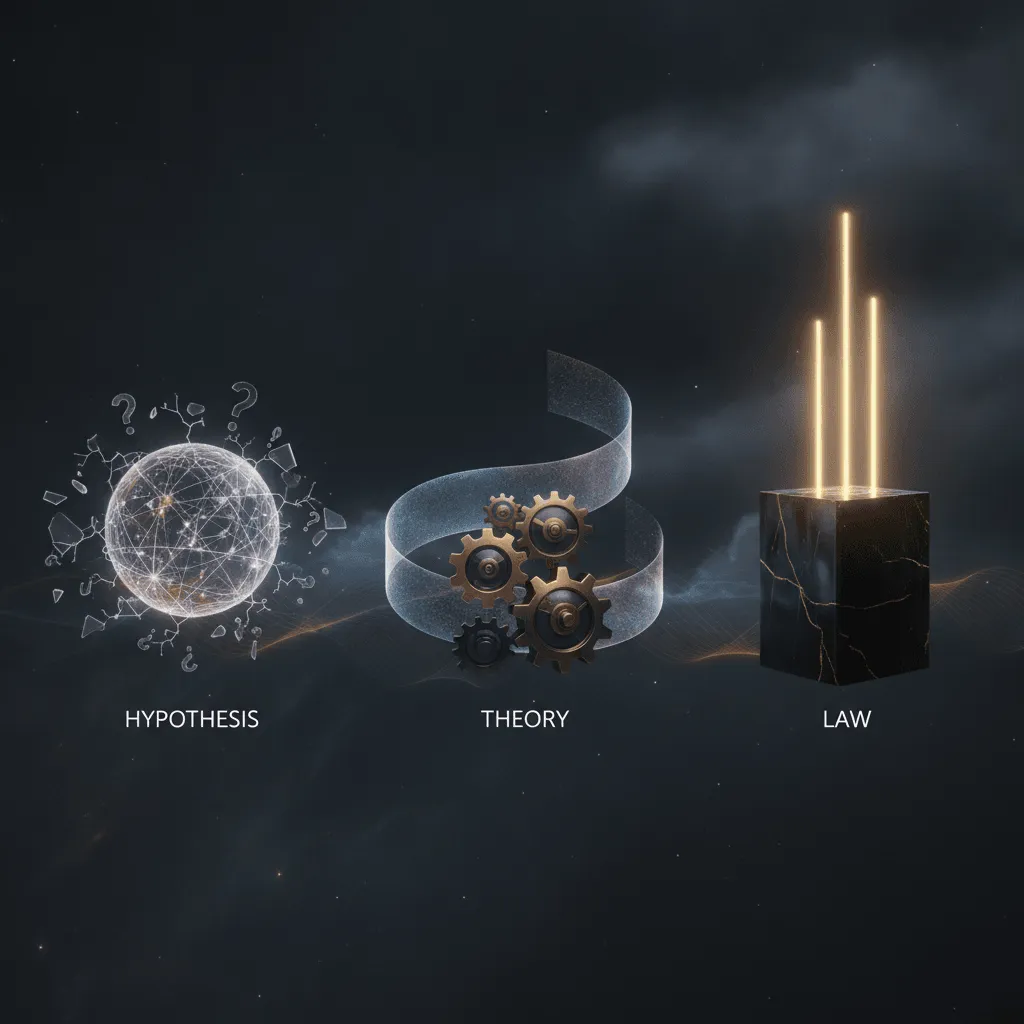
Theory vs. Hypothesis vs. Law: Clearing Up the Confusion
A scientific theory is not a guess. It is the highest level of certainty science offers. Understand how hypothesis, theory, and law differ in scope, not in a linear hierarchy.
Clear explanations of scientific ideas and discoveries for curious general readers — accurate, never sensational.
A scientific theory is not a guess. It is the highest level of certainty science offers. Understand how hypothesis, theory, and law differ in scope, not in a linear hierarchy.
On February 28, 1953, Watson and Crick announced DNA's double-helix shape. Rosalind Franklin's X-ray data made it possible, but she was not included in the announcement or the Nobel Prize.
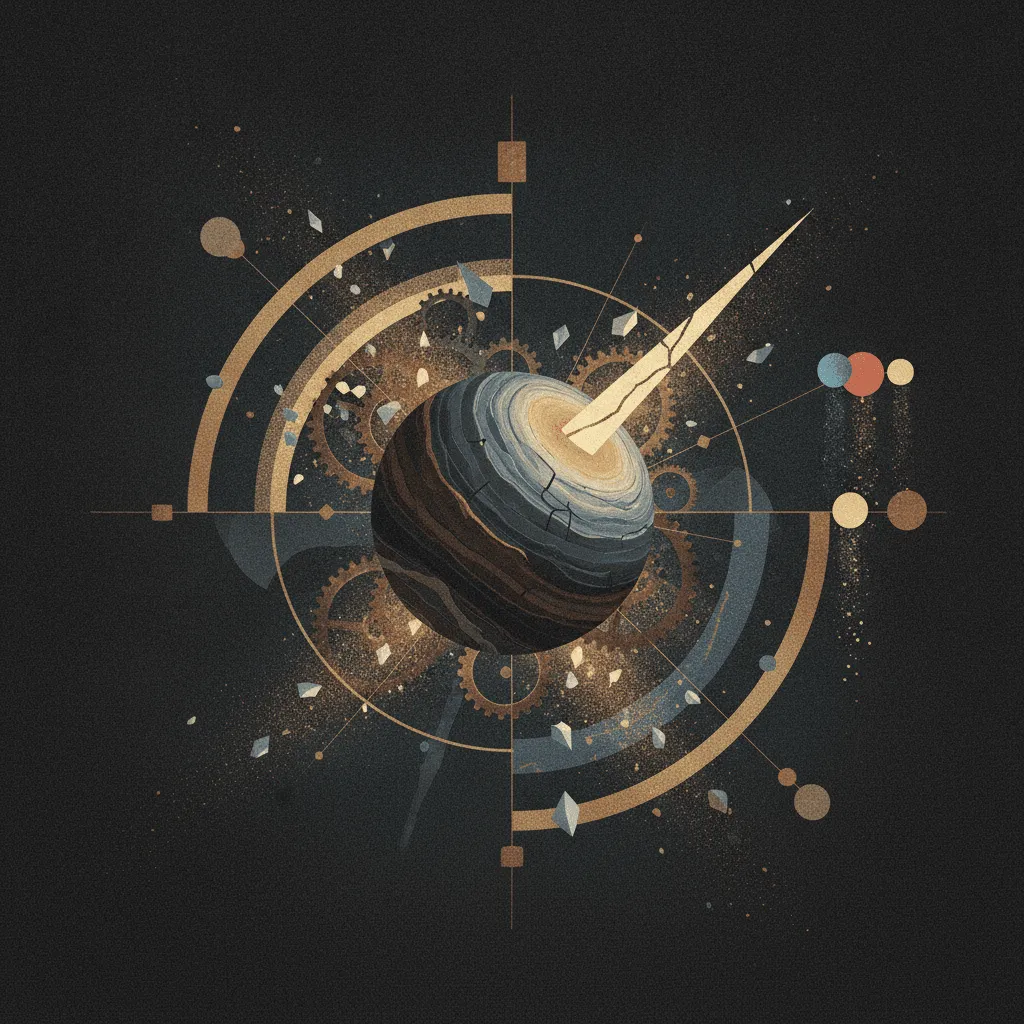
Radiometric dating uses the predictable decay of radioactive isotopes to assign numeric ages to rocks and fossils. Learn how half-lives, common isotope pairs, and cross-checking methods give us the age of Earth.
Discover the core principles of scientific thinking, falsifiability, correlation versus causation, and bias recognition, and learn how to apply skepticism and logic to evaluate evidence in everyday life.
The placebo effect is a measurable biological response triggered by expectation and conditioning, not imagination. This article covers its neuroscience, the nocebo effect, and implications for medicine.
A battery converts chemical energy into electrical energy through redox reactions. This article explains the components, the lithium-ion shuttle mechanism, and factors affecting capacity, safety, and future chemistries.
A step-by-step guide to understanding and critically evaluating peer-reviewed research, empowering non-scientists to read scientific papers with confidence.
Color is a perception, not a property of objects. This article explains the physics of light and the biology of human color vision—how wavelengths, rods, cones, and neural processing combine to give us our colorful world.
The popular belief that people are either left-brained or right-brained is not supported by neuroscience. Learn the real science behind brain hemispheres and why the myth persists in self-help and pop culture.
Discover the trillions of microbes living in and on your body—the human microbiome—and how they impact digestion, immunity, mood, and overall health. Learn how diet and antibiotics can alter this delicate ecosystem.
What causes earthquakes? How are they measured? Why is prediction so difficult? Explore the science behind the shaking ground, from plate tectonics and seismology to the engineering and preparedness that reduce risk.
Stars are born in vast clouds of gas and dust, live for millions or billions of years fusing hydrogen, and die in spectacular supernovae or fade as white dwarfs. Their life cycle enriches the cosmos with the elements necessary for planets and life.