Stars begin their lives in enormous, cold clouds of gas and dust known as nebulae. These stellar nurseries can stretch across hundreds of light-years and contain enough material to form thousands of stars. A disturbance—like a shockwave from a nearby supernova—can compress a region within the nebula, causing it to start collapsing under its own gravity. As the dense clump shrinks, it fragments into multiple cores, each of which can become a star. The infalling gas and dust form a rotating core called a protostar. At this stage, the protostar is invisible at optical wavelengths, shrouded in a cocoon of dust, but it glows in infrared. As the protostar continues to contract, its core temperature skyrockets. When it reaches around 10 million Kelvin, hydrogen nuclei have enough energy to overcome their mutual repulsion and fuse into helium, releasing immense energy. This nuclear ignition marks the birth of a true star, halting further collapse and beginning its long stable life. The entire process, from initial collapse to ignition, takes only a few million years. The mass of the star at birth is determined by the amount of material in its parent core, and this mass dictates its entire future evolution.
Once hydrogen fusion begins, the star enters the main sequence phase, the longest period of its life. For about 90% of a star's existence, it fuses hydrogen into helium in its core, generating outward pressure that precisely balances the inward pull of gravity. This equilibrium keeps the star stable. The star's mass is the key parameter: it determines both how brightly the star shines and how long it will remain on the main sequence. A star like the Sun, with one solar mass, will maintain this balance for roughly 10 billion years. More massive stars, however, are much brighter and consume their fuel rapidly. A star with ten times the Sun's mass can be thousands of times more luminous, but its main sequence life lasts only a few tens of millions of years. At the other extreme, the smallest red dwarfs may continue fusing hydrogen for hundreds of billions of years—far longer than the current age of the universe. During the main sequence, a star's energy output is remarkably stable, which has allowed life to evolve on Earth around our Sun. When plotted on a Hertzsprung-Russell diagram, main sequence stars form a diagonal band from hot, luminous stars to cool, dim ones, reflecting their mass range.
When a low- or medium-mass star like the Sun exhausts the hydrogen in its core, gravity compresses the core once more. The core contracts and heats up, while the outer layers expand dramatically, turning the star into a red giant. During this phase, the star fuses hydrogen in a shell around the core. If the core becomes hot enough, it may fuse helium into carbon and oxygen. But for stars under about eight solar masses, fusion stops at carbon and oxygen, leaving an inert core. The star becomes unstable and ejects its outer layers into space, forming a beautiful, glowing shell called a planetary nebula. The remaining core—now stripped of its outer veil—is a white dwarf: an incredibly dense object about the size of Earth but with a mass comparable to the Sun. A white dwarf no longer undergoes fusion; it simply cools and fades over billions of years. Eventually, it will become a cold black dwarf, but the universe is not yet old enough for any black dwarfs to exist. Planetary nebulae are fleeting, lasting only tens of thousands of years, but they enrich the interstellar medium with carbon and other light elements that are crucial for forming planets and organic molecules.
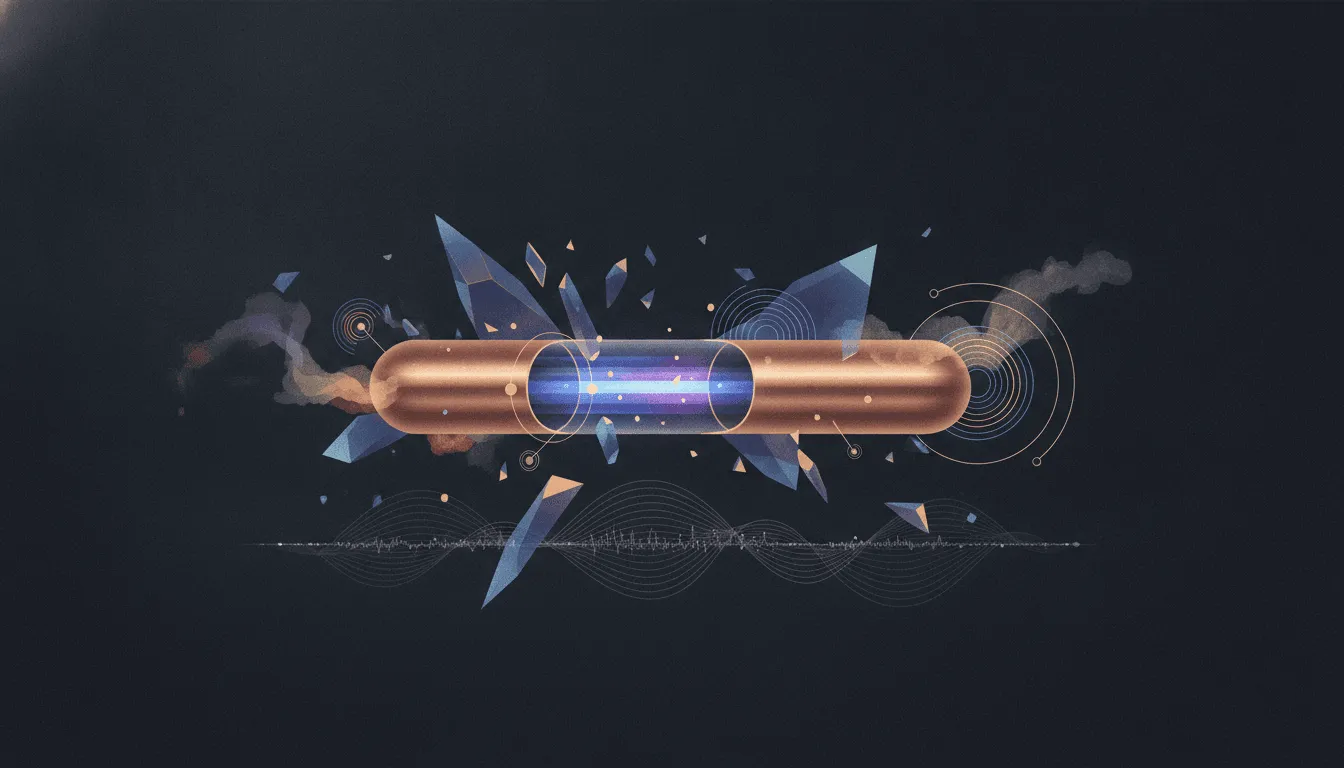
Stars more massive than about eight solar masses meet a much more violent end. They burn through their fuel in hierarchical stages: hydrogen, helium, carbon, neon, oxygen, and silicon, each stage producing heavier elements. Finally, an iron core builds up. Iron cannot be fused to release energy; instead, fusing heavier elements absorbs energy. With no outward fusion pressure, the core collapses catastrophically in less than a second. This collapse triggers a shockwave that tears the star apart in a colossal explosion known as a supernova. For a brief time, a single supernova can outshine an entire galaxy. The remnant depends on the mass of the original core. If the core is between about 1.4 and 3 solar masses, gravity crushes protons and electrons into neutrons, forming a neutron star—an object just 20 kilometers across but with a mass comparable to the Sun. Neutron stars often spin rapidly and emit beams of radiation; we detect them as pulsars. Learn more about how scientists study these extreme objects. If the core exceeds about 3 solar masses, even neutrons cannot withstand gravity, and the core collapses into a black hole—a region where gravity is so strong that nothing, not even light, can escape. These explosions are among the most energetic events in the universe, forging and distributing heavy elements like gold and uranium.
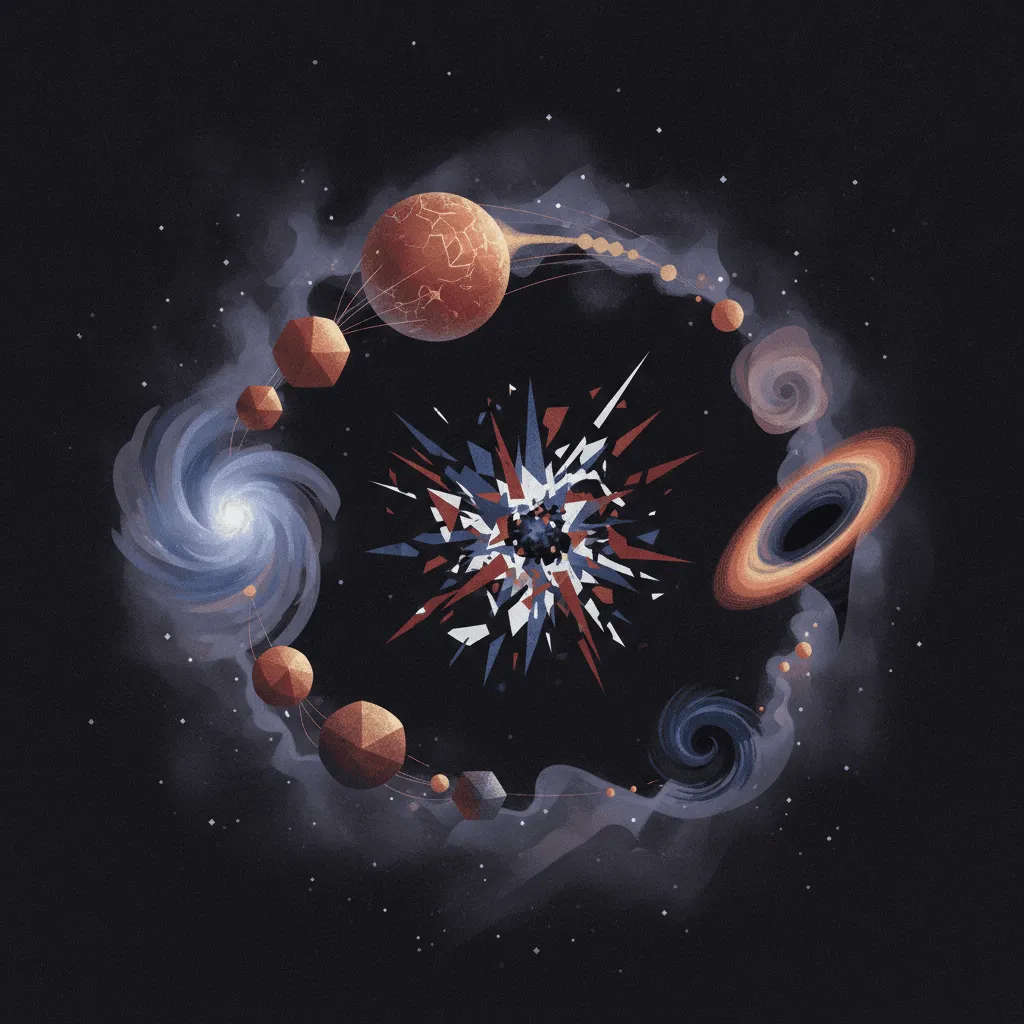
The death of stars is not an end but a beginning. When low-mass stars shed their outer layers as planetary nebulae, they release carbon, nitrogen, and oxygen into space—the building blocks of organic molecules and water. High-mass stars, through their supernova explosions, forge and scatter heavier elements like iron, gold, and uranium. In fact, nearly all elements heavier than hydrogen and helium were formed inside stars or during supernovae. This cosmic recycling enriches the interstellar gas and dust from which new stars and planetary systems condense. Our own Solar System formed from such enriched material about 4.6 billion years ago. The carbon in our bodies, the oxygen we breathe, and the iron in our blood all originated in stars that lived and died long before the Sun existed. Thus, the life cycle of stars is intimately connected to the existence of planets and life. Each new generation of stars contains a greater abundance of heavy elements, thanks to the contributions of preceding generations. This cycle of birth, life, and death drives the chemical evolution of the universe, ensuring that the raw materials for rocky planets and living organisms are continuously replenished.