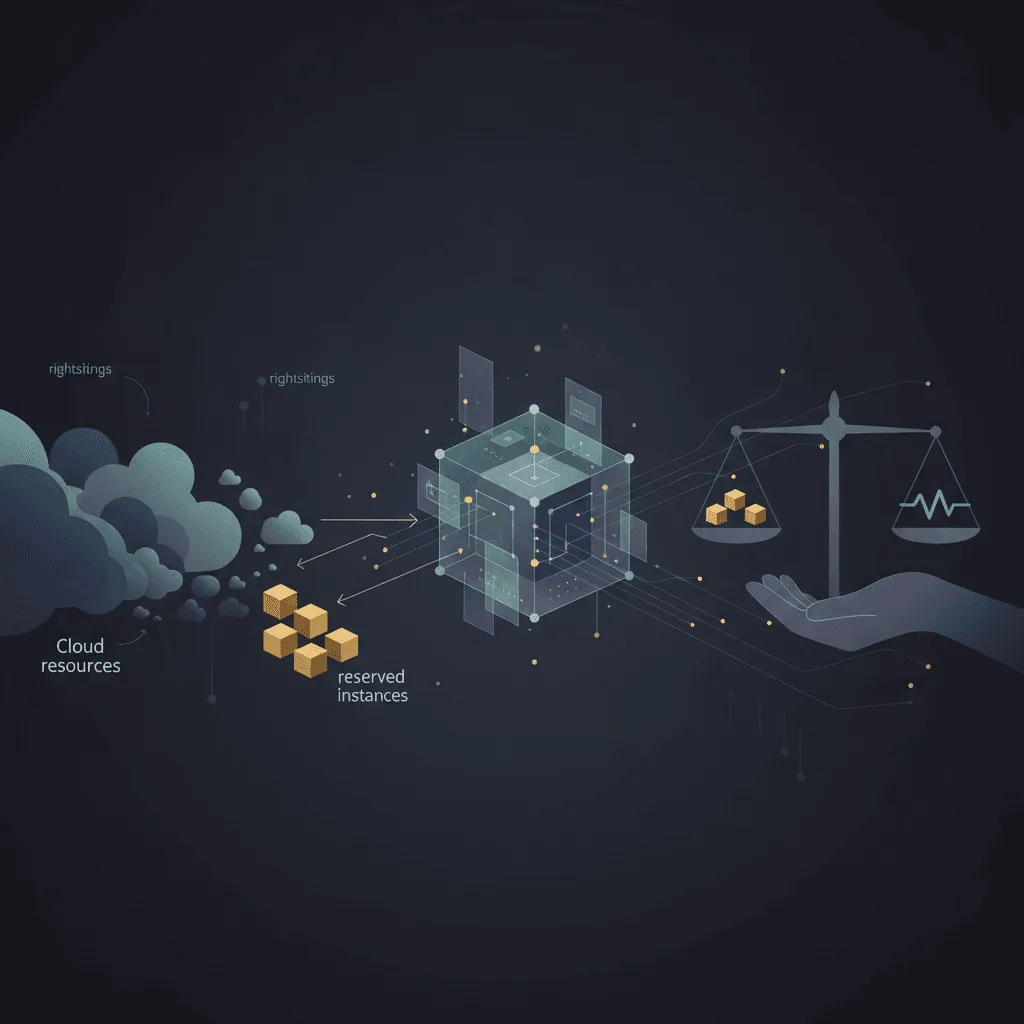
As organizations transition from AI hype to pragmatic deployment, one area ripe for targeted application is cloud cost management. Cloud spending often balloons unexpectedly, driven by over-provisioned resources and suboptimal pricing models. Traditional methods of rightsizing and purchasing reserved instances are manual and slow, often missing savings opportunities at scale across multiple accounts and regions. The broader movement toward pragmatic AI—where smaller, targeted models fit into specific workflows—offers a timely approach to tackle these challenges. According to industry observers, 2026 is shaping up as the year AI gets practical, shifting from flashy demos to targeted deployments. This pragmatic shift is exactly what cloud cost management needs: instead of chasing every possible saving, organizations can apply ai cloud cost optimization tools precisely where they yield measurable returns. Viewing AI as 'normal technology'—a tool under human control—highlights the importance of measured adoption in cost optimization. The task is not to hand over decisions to AI, but to use its analytical strengths within a framework that balances cost reduction with operational stability. Cloud cost optimization becomes a high-impact use case because the data is abundant and the decisions are repetitive, making it ideal for AI augmentation.
AI-powered cloud cost management ai tools can analyze historical utilization data from compute, storage, and network resources, identifying patterns that indicate over-provisioning or idle capacity. These tools generate concrete recommendations for rightsizing instances or purchasing reserved instances and savings plans. For example, an AI might analyze a year of usage and suggest moving steady-state workloads from on-demand to reserved instances with specific term lengths and payment options, while recommending rightsizing for variable loads by selecting different instance families or moving to spot instances for fault-tolerant workloads. This approach mirrors the wider industry trend toward deploying smaller, more focused AI models that fit into specific operational environments, as noted by technology strategists. The emphasis is on augmentation, not automation: ai rightsizing models surface patterns that human analysts would miss, but they rely on human validation to ensure recommendations align with business goals. Rather than replacing human analysts, AI augments their ability to spot savings opportunities in massive datasets, making the FinOps team more effective and enabling proactive rather than reactive cost management.
The normal technology perspective describes AI as a tool that humans can and should control, not as a superintelligent entity.
Despite its analytical power, AI lacks context about business criticality. A recommendation to downsize a production database might save money but could throttle essential I/O for a customer-facing application with strict latency requirements. Compliance regulations like GDPR or HIPAA may also restrict data residency or require specific encryption, and AI may not inherently know those constraints. As the 'normal technology' framework stresses, AI remains a tool that humans should control, not an autonomous decision-maker. The most effective cost optimization combines AI's pattern recognition with engineers' understanding of workload priorities, ensuring that cost savings do not compromise service quality. For instance, a batch processing job that runs nightly and can tolerate interruptions might be a good candidate for rightsizing or spot instances, but a front-end web server with unpredictable traffic requires burst capacity that AI might misinterpret as low utilization. Human engineers know the traffic patterns and can override recommendations that risk performance. The normal technology perspective reminds us that AI adoption is gradual and requires institutional support, making human-in-the-loop processes critical for success in finops ai initiatives.
Organizational governance structures can harness AI recommendations through consistent resource tagging and policy definition. By tagging resources with metadata—environment (production, staging, development), criticality, and owner—teams can create guardrails that tell AI tools which changes are safe to automate and which require human sign-off. For example, a policy might state: 'All resources tagged as environment=production require human approval for any rightsizing action, while resources tagged as environment=development can be automatically adjusted.' AI tools can enforce these policies and provide audit trails, ensuring compliance with internal controls. This integration with existing FinOps and governance frameworks ensures accurate cost allocation and improves accountability across departments. Tagging also enables chargebacks, allowing teams to see exactly which workloads are generating savings or costs. A well-defined tagging strategy is the foundation for any finops ai initiative, as it allows AI to apply policies consistently and measure savings by workload. Integrating with central FinOps platforms can provide dashboards for tracking savings and compliance in real time.
Implementing AI-driven cloud cost optimization need not be a leap of faith. A phased approach helps organizations realize savings while maintaining control. Phase 1: Audit current cloud spend and inventory all resources across accounts and regions. Use cloud provider tools or third-party platforms to gather a complete picture, identify untagged resources, and assign ownership. Phase 2: Deploy an AI cost optimization tool that aligns with your cloud provider and governance needs. Evaluate tools based on feature set, integration capabilities, and accuracy of recommendations. Run a pilot on a subset of workloads to validate the model. Phase 3: Create a cross-functional review team with engineering, finance, and operations. Establish criteria for accepting or rejecting recommendations based on risk and business impact. Phase 4: Automate safe changes, such as rightsizing non-production resources, via infrastructure-as-code and CI/CD pipelines with automated compliance checks. For manual changes, implement a change management process with approvals. Phase 5: Continuously monitor results using dashboards, iterate on policies, and measure savings against a baseline. Track payback periods for reserved instances and adjust strategies quarterly. This structured method ensures that ai cloud cost optimization delivers measurable value without disrupting operations.