Charge Separation: Building the Storm's Electric Field
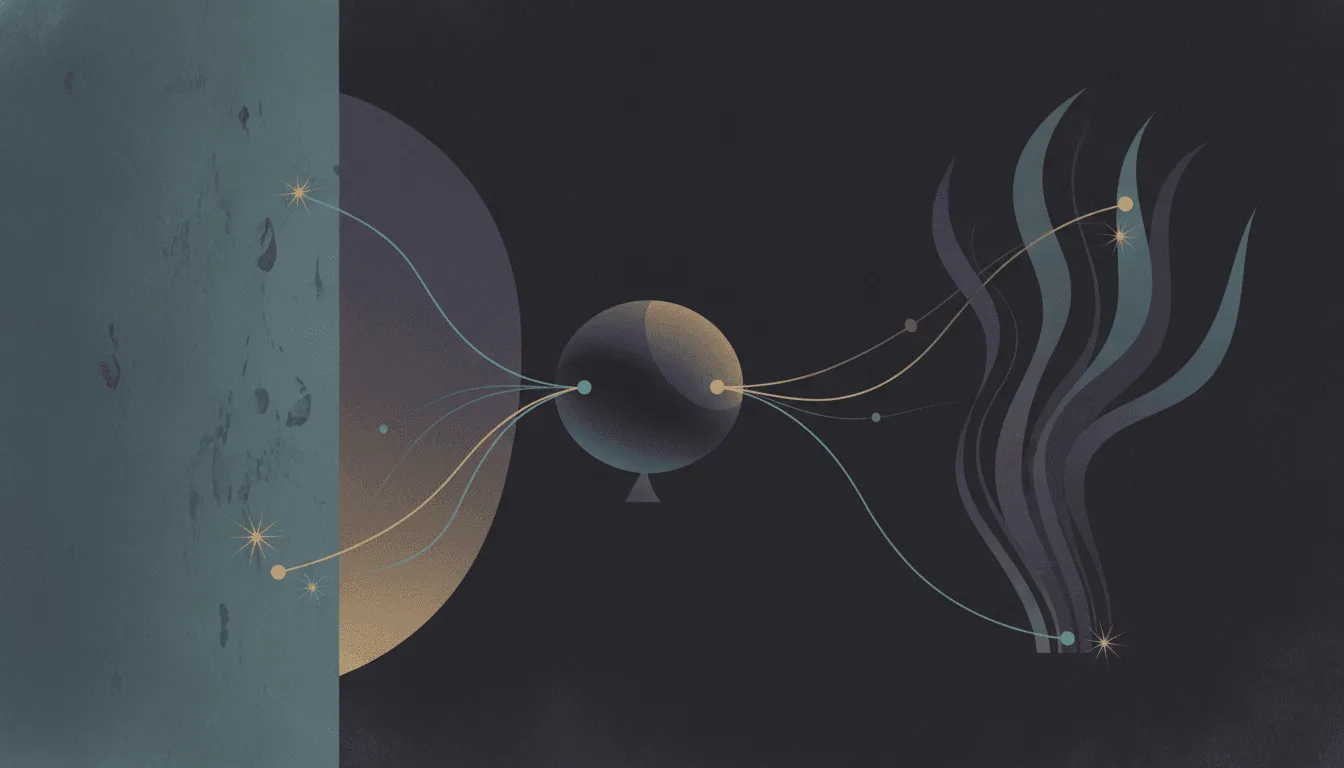
Lightning is a giant spark of electricity. It forms when charge separation inside thunderstorm clouds becomes extreme. The process begins within a cumulonimbus cloud. Strong updrafts carry supercooled water droplets and ice crystals upward. As they rise, they encounter colder temperatures and freeze. These ice particles collide with graupel, which is a type of soft hail. Graupel forms when supercooled water freezes onto a snowflake. The collisions transfer electrons. Lighter ice crystals lose electrons and become positively charged. Because they are lighter, they are carried to the top of the cloud. Heavier graupel gains electrons and becomes negatively charged. It settles in the middle and lower portions of the cloud.
This separation of charge creates a strong electric dipole. A dipole is a pair of opposite charges separated by a distance. In a thundercloud, the upper region is positively charged, and the middle and lower regions are negatively charged. There is also a smaller positive pocket near the cloud base. The negative charge in the cloud induces a positive charge on the ground underneath. This happens because the negative charge repels electrons on the ground, leaving a net positive charge on the surface.
The electric field between these separated charges builds as the storm develops. When the electric field exceeds the breakdown threshold of air, the insulating capacity fails. Air is normally an insulator, but a strong enough electric field can ionize air molecules, creating free electrons and ions. This ionization turns the air into a conductor. Once the air becomes conductive, a rapid discharge can occur. That discharge is lightning. The updrafts continuously supply new ice crystals, ensuring that the charge separation persists until the field is strong enough to break down.
The Stepped Leader and the Return Stroke: How a Bolt Forms
A cloud-to-ground strike begins with an invisible stepped leader. This is a channel of ionized air that propagates downward from the cloud. It moves in discrete steps of about 50 meters. Each step advances the leader closer to the ground. The leader branches as it moves, creating the forked appearance we see in lightning. The branching happens because the ionized channel can take multiple paths.
As the leader approaches the ground, its intense electric field draws upward streamers from tall objects. Streamers are also channels of ionized air. They rise from pointed objects like trees, buildings, and antennas. When a streamer connects with the descending leader, a conductive path is complete. This path links the cloud to the ground, allowing current to flow.
Then the return stroke surges upward through that channel. It carries a typical current of 20,000 to 30,000 amperes. Some strikes exceed 200,000 amperes. The return stroke travels at roughly one-third the speed of light. This is the brilliant flash we see. The entire process happens in a fraction of a second. The stepped leader and return stroke together form the lightning bolt. The return stroke is the most luminous part, and it is what heats the air to extreme temperatures.
Why Thunder Follows: The Shockwave of Heated Air
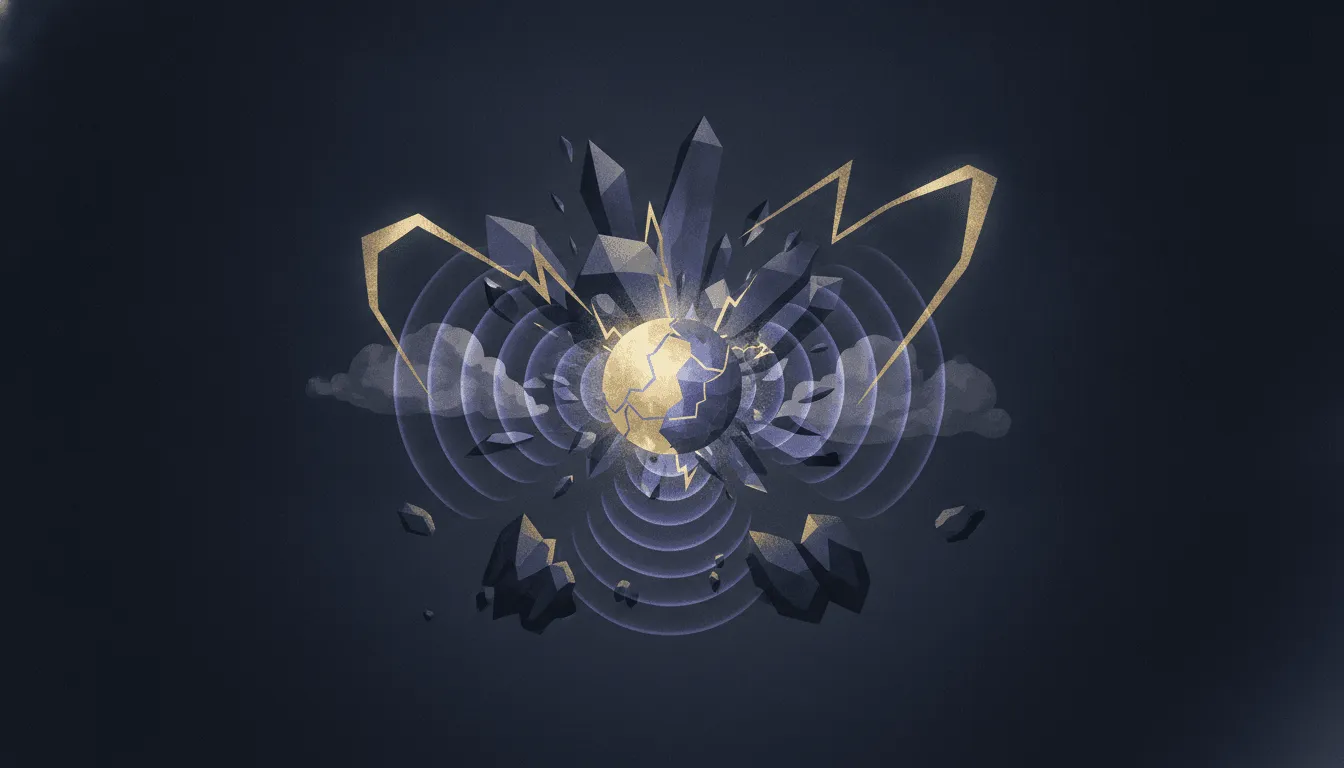
The return stroke heats the air in the channel to approximately 30,000 Kelvin. That is about five times hotter than the Sun's surface. This rapid heating causes the air to expand explosively. The expansion creates a supersonic shock wave. The shock wave initially travels faster than the speed of sound. As it propagates away from the channel, it decays into an ordinary sound wave. This sound wave is what we hear as thunder.
The delay between flash and thunder tells you the distance to the strike. Because light travels much faster than sound, you see the flash almost instantly. The thunder arrives later. The longer the delay, the farther away the lightning. By timing the delay, you can estimate the distance to the strike. The shock wave is a pressure wave, similar to a sonic boom, but it quickly becomes a regular sound.
Staying Safe
Lightning is a powerful electrical discharge. It can be dangerous. If you hear thunder, seek shelter indoors. The delay between flash and thunder tells you how close the lightning is. A short delay means the lightning is nearby. Avoid open fields and high ground if you are caught outside.