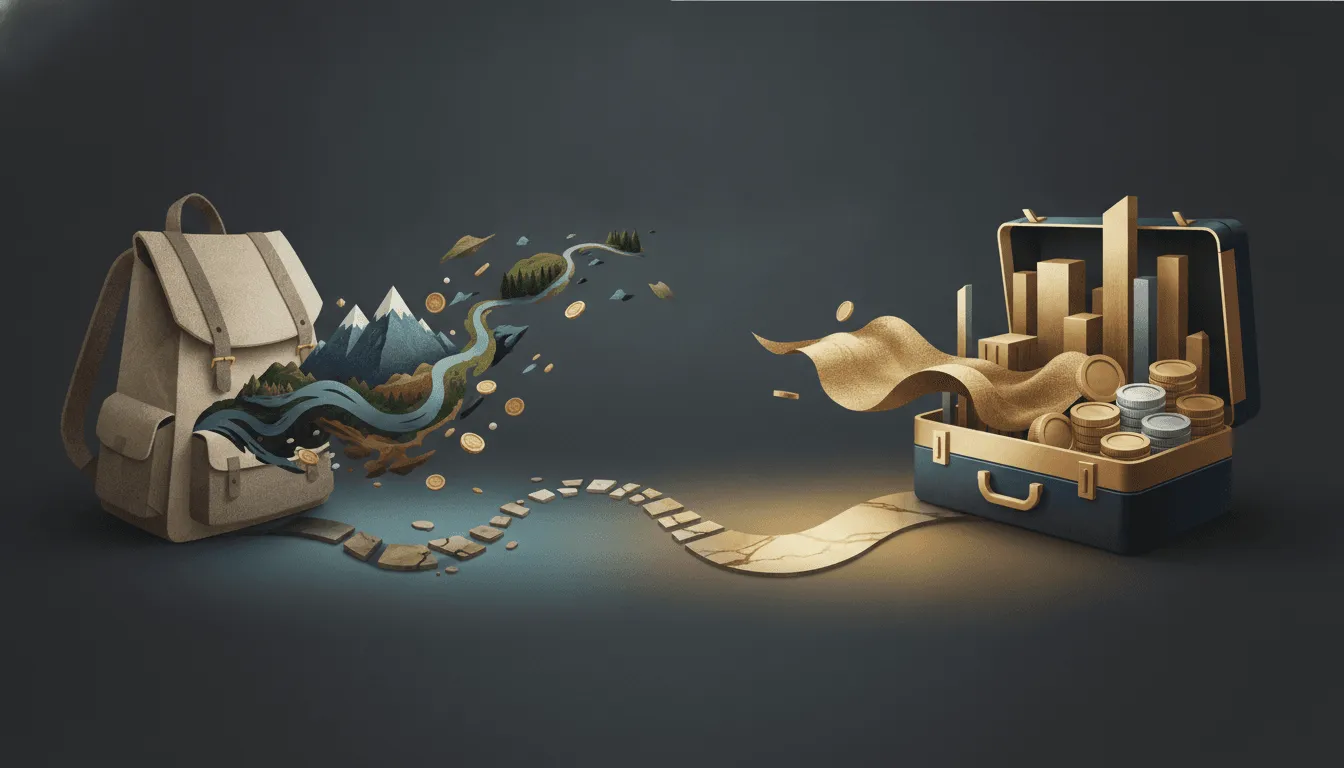
The core trade-off in travel budgeting is time versus comfort: one budget-conscious traveller would rather skip a fancy hotel and stay three weeks instead of one. A case study shows how a low-comfort, high-time style can stretch a budget: ten weeks in Europe for two people on $9,000 total, with no misery or missed experiences. Before booking, define your travel goals; skipping this step is one of the most expensive mistakes, because you end up paying for things that don't matter to you. The backpack-versus-suitcase choice is one visible version of this trade-off, with its own costs. For a fuller framework, see our budget travel planning guide.
Backpacking keeps costs low across the board. Hostels, homestays, campsites, and university dorms replace hotels. Trains are the recommended way to get around Europe, and overnight trains save a night's accommodation. Cooking your own meals and carrying minimal gear cut food and baggage costs. The trade-off is comfort: shared rooms, limited privacy, and less predictable schedules.
Flashpacking trades time for comfort. Private rooms replace dorm beds. Flights and high-speed rail replace overnight trains. Dining out replaces self-catering. The result is a higher daily cost, but more energy at each stop. You gain comfort but lose the slower, more flexible pace of budget travel.
Slow travel spreads costs over longer stays. A slow travel budget leans on rentals with kitchens, home cooking, and local transport instead of intercity trains. Upfront accommodation costs are higher, but daily spending drops. This style suits remote workers who need stable internet and a desk.
Luxury-on-a-budget concentrates spending on a few experiences. You pay a premium for comfort and convenience on the things you care about, and skip the rest. For a deeper look at cheap stays, see our accommodation hacks guide.
A flashpacker's version of the backpacker's $9,000 ten-week Europe trip would run far higher, because private rooms, flights, and restaurant meals each multiply the daily total.
Hidden costs also shift with style. Laundry adds up on long trips. Gear matters: because budget flyers are usually in the last boarding group, a backpack avoids the scramble for overhead space and the risk of gate-checking a bag. But long travel days leave shoulders and back sore. One travel reporter who backpacked through Europe for two weeks felt that strain firsthand. A midlife traveller who has circled the world twice with both a large suitcase and a heavy backpack calls the wrong choice a source of burden, expense, and consequences. She now recommends a wheeled rolling backpack as a compromise. Before you book, see our carry-on packing guide.
Camping brings another hidden cost: getting gear to the destination by plane. Work-friendly spaces and social spending also vary. A slow traveller working remotely pays for cafés or coworking; a backpacker sharing dorm rooms spends more on social outings. Across styles, booking in advance is essential in peak travel months. Heading east in summer or to the Mediterranean in autumn stretches money further.
To identify your style, ask four questions. Would you trade comfort for more days away? Are you willing to share a room? Do you prefer cooking or eating out? Do you value speed or scenery in transport?
Your answers map a travel personality to a budget. Backpackers allocate more to transport and less to accommodation. Flashpackers spend more on both accommodation and transport, because they choose private rooms and flights. Slow travellers spend more upfront on a rental, then less daily. Luxury-on-a-budget travellers set aside a fixed splurge fund and protect it. There is no single right way to travel, since everyone's financial picture differs. You can mix them: backpack for transport, flashpack for accommodation. Overnight trains combine transport and lodging in one cost. These allocations are not fixed; they are starting points for matching your spending to your priorities. Your answers will also reveal whether you prefer to spend on experiences or on comfort.