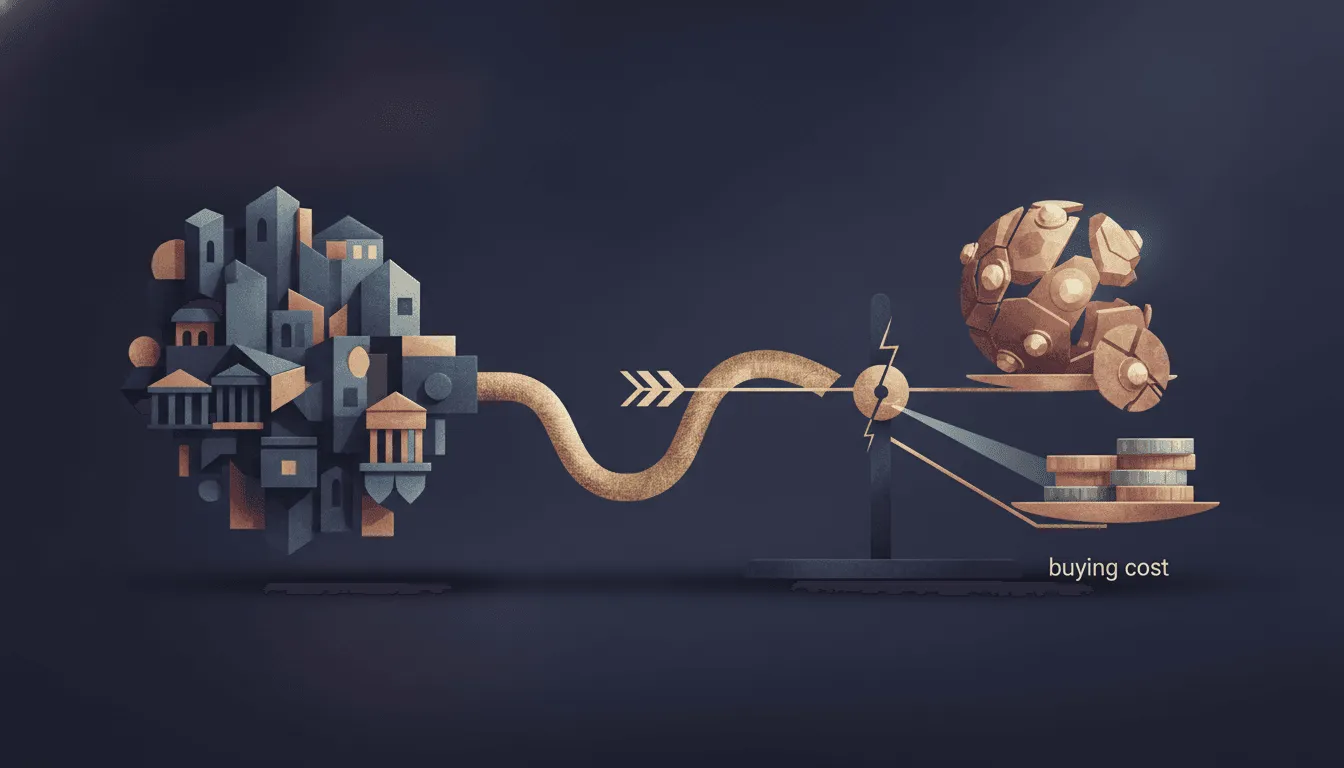
Two separate tickets can undercut a single through-fare by 30–50%. The lower price buys the removal of the airline's obligation to rebook you when a connection fails. Whether the saving covers that loss decides the comparison.
Two Tickets, Two Contracts: Who Pays When the First Leg Is Late
One ticket equals one contract. If the first flight is late and you miss the connection, the airline or its partner rebooks you at no cost on the next available flight.
Separate tickets create two strangers. The second airline treats you as a no-show, the fare is usually forfeited, and a new ticket and other expenses fall on you. Search engines do not surface this asymmetry: a self-transfer appears with a connection time and a lower price, so the missing protection stays invisible at the moment you compare.
Sizing the Connection: Baggage Recheck, Buffers, and the Overnight Call
Separately booked flights usually require you to reclaim your checked bag and check in again, which means clearing immigration to reach the check-in hall. You may also need a transit visa or other documents even when you never leave the airport. Realistic minimum buffers sit at 4 hours with carry-on and 6–8 hours with a checked bag, or an overnight stop when the onward leg is the last flight of the day. Packing carry-on removes the recheck step and shortens the requirement; a carry-on packing guide covers that side.
Deplaning and walking to immigration run 10–25 minutes at a large hub. Immigration takes 10 minutes through an e-gate and over an hour at peak arrival banks. Baggage reclaim runs 20–45 minutes, starting only after the first bags reach the belt. An overnight stop can mean a terminal bench, a transit hotel, or a short-stay room. Every hour here is a cost the fare gap has to cover.
The Break-Even Framework: Price Saved Cash Against Added Hours
Saved cash is the numerator and added hours the denominator. From Singapore, a one-stop is worth taking only if the saving reaches at least SGD 100 per hour of extra journey time; below that line you lose more than you gain.
Run the arithmetic per route. London direct is about 13 hours; a one-stop adds 4–8 hours for savings of SGD 400–900, which can work out as low as SGD 50 per hour, below the threshold. Sydney is borderline: direct is 7–8 hours, a one-stop adds 3–6 hours, and savings are SGD 250–600, so the worst combination earns SGD 42 per hour. Demand SGD 150 per hour there, and a saving north of SGD 450 on a 3-hour penalty, which most fares fall below.
Shorter trips fail the test harder. Tokyo direct is 6–7 hours, one-stops add 2–5 hours, and savings run SGD 150–400, but the real cost is losing a morning or afternoon in the city. For 4 days or fewer, take the direct regardless of price. For a week or more, consider the connection only if the saving exceeds SGD 300. Seoul follows the same pattern with savings clustering at SGD 150–400, rarely justifying a connection unless you are using a stopover programme for a free night in Doha or Dubai.
Running the Side-by-Side on One Itinerary
Price both routes all-in on the same itinerary. Add baggage fees, terminal transfers, meals, any overnight room, and the replacement-fare worst case to the self-transfer total, then compare it with the flexible through-ticket.
A worked comparison: a self-transfer at 7,600 THB against a single ticket at 8,000 THB all-in, a 400 THB saving. It looks like a win until the first flight is delayed and a new ticket pushes the self-transfer total far above the single-ticket option. Assume you reclaim the bag and clear immigration between flights. Stay overnight instead if leg two is the last flight of the day.