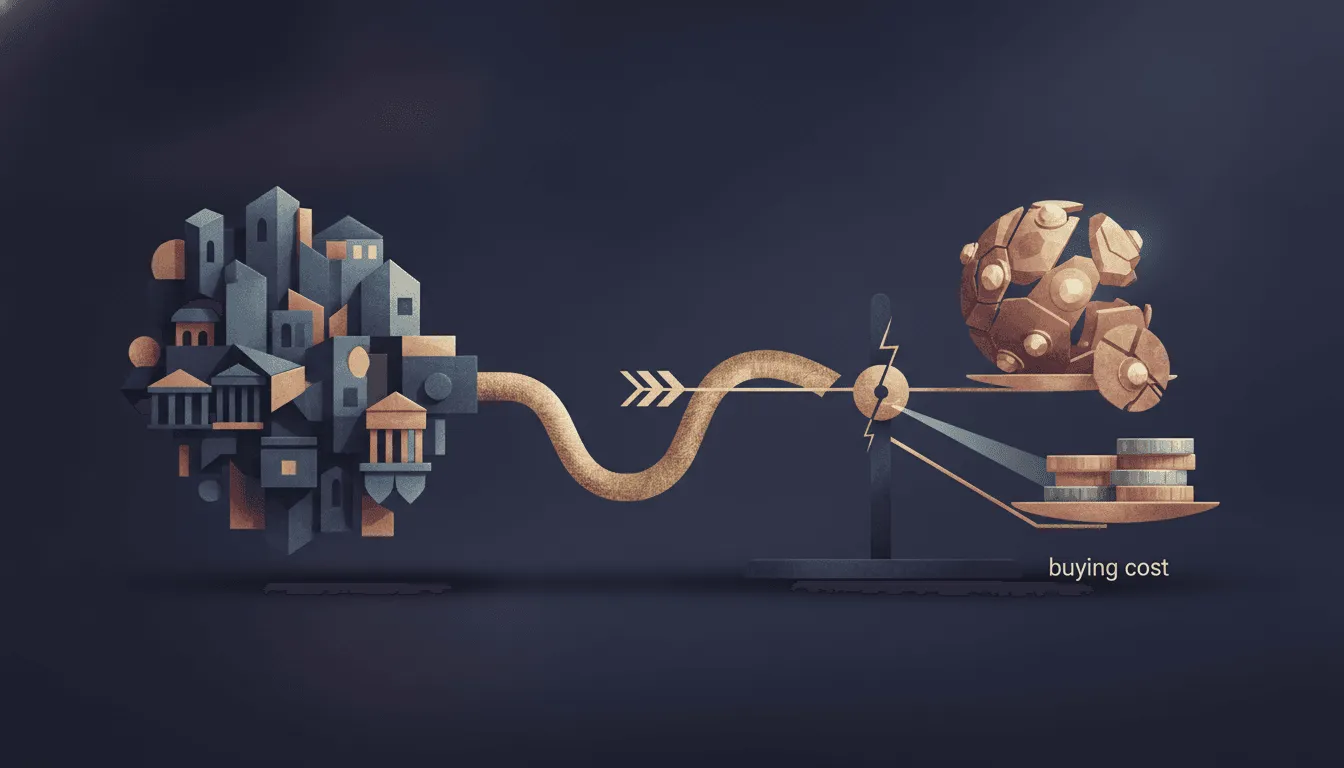
A multi-attraction pass saves money only past a break-even visit count, and that count falls out of one division: the pass price against the tickets you would actually use. Convenience is the second question, not the first.
Start With the Ledger: What the Pass Price Has to Beat
Write down every door you will actually enter, in the order you will visit, with the posted adult ticket beside each. That list, not the pass's inclusion brochure, is the number the pass price has to beat. Two adults at three museums is six tickets, so a group clears break-even sooner than a solo traveller.
Assign each cost to one side before you divide. Transit fares, timed-entry fees and parking sit on the pay-as-you-go side, not inside the pass's value.
Access programs shrink the pay side. Museums for All sets admission at $3 or less for EBT cardholders at participating sites. Bank of America Museums on Us opens participating museums free on the first full weekend of each month for cardholders. Free museum days and free permanent collections cut the total further.
The Break-Even Count Is One Division
Divide the pass price by the average museum ticket cost in that city and you have the break-even count. A finer version: run the totals in visit order and mark the visit where the running total passes the pass price. Every stop after that is savings; every stop before it is a loss.
Paris: the Museum Pass at €70 for 48 hours sits against the Louvre at up to €32, the Musée d'Orsay at €16 and Versailles at €25, a set already hard to fit into two days. A separate 2026 guide lists a 2-day Paris Museum Pass at €85 breaking even after roughly three major museums. Berlin's 3-day Museumspass at €32 needs about three visits against state museums priced €12 to €19.
Museum passes are not city sightseeing passes. Museum admission often runs €10 to €20 rather than the €30 to €50 typical of big ticketed attractions, so the same pass price needs more visits. A pass that pays for itself at three big museums may need six small ones. PassVerdict's assessment: a museum pass earns its price through skip-the-line access at one major museum or through cumulative savings across three or more visits, rarely both at once and never automatically because the pass exists.
The Inclusions That Inflate the Advertised Value
Published comparisons show what the advertised spread rests on. The Lisbon Card at €51 for 48 hours is pitched against €109.50 of individual entry plus public transport across eight attractions. The Stockholm Pass at SEK599 for 24 hours sits awkwardly against a single Vasa Museum ticket of SEK195 that could absorb half a day on its own. The Istanbul Explorer Pass at €75 for two attractions scores a discount against Topkapi Palace at €60 and Haghia Sofia at €35.
Exclusions matter more than inclusions. Amsterdam's I amsterdam City Card deliberately excludes the Van Gogh Museum and Anne Frank House, so it needs a heavier day to justify itself. The Amsterdam Museumkaart is an annual card for residents and repeat visitors, usually a mistake for one short trip regardless of how many museums you plan to see.
Cards sold by official government tourism bodies are generally better value than commercially run ones, and some passes allow queue jumps. Treat the queue jump as a convenience factor, not a number you plug into the division. Check that the doors on your list are actually included before crediting the pass with any saving.
Validity Windows, Transit Bundles, and When to Pay as You Go
A 48-hour pass pushes you to compress the itinerary. Factor in transit between sights, required reservations and the cost of that compression before crediting the pass with a saving.
Whether transit is bundled changes the arithmetic. The Lisbon Card's headline value includes public transport, so strip that portion out, re-run the division as a sightseeing-only pass, then compare it with a separate transit ticket. Transport planning carries its own trade-offs, covered in Getting Around on a Budget.
Paying per door wins when your must-see list is short, partly free, or slow-paced. One museum every other day is almost always cheaper on individual tickets.
Rules move year to year, so verify current prices. The Louvre now charges €22 for EEA visitors and €32 for everyone else, a 45% jump for non-Europeans from January 14, 2026. Berlin's State Museums are no longer free on the first Sunday of the month. The Roma Pass has suspended its 48-hour version with no confirmed return date.