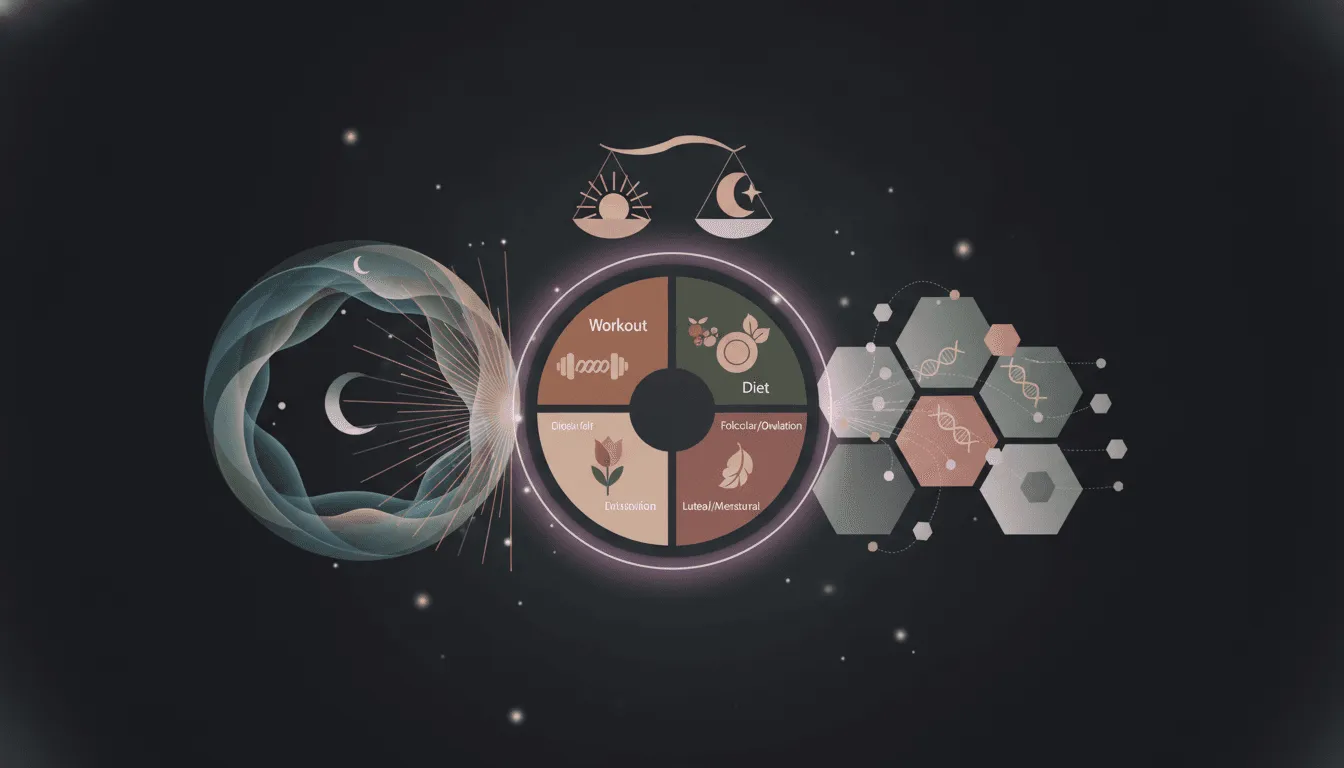
Cycle syncing means scheduling exercise, food, sleep, and work around the four phases of the menstrual cycle: menstruation, the follicular phase, ovulation, and the luteal phase. The framework assumes that shifting estrogen and progesterone change energy, mood, sleep, and appetite, so each phase calls for a different routine. The pitch is that you work with your hormones instead of against them.
The usual prescriptions are specific. Limit exercise when hormone levels fall before and during your period. Push high-intensity training into the window when estrogen runs high. Workout apps now sell phase-specific plans, and the idea has moved past fitness forums: in one Women's Health Instagram poll, 87% of responders said they cycle-sync. Diet advice takes the same shape, with different foods assigned to each phase, though the sources describe it only in general terms.
Popularity does not make the framework the same as something simpler. Cycle syncing implies pre-planned, phase-based rules: set days for heavy lifting, set days for rest, set foods for each week. Symptom-aware adjustment works differently. You change intensity, duration, or food based on how you feel today, meaning your energy, pain, and mood, not where the calendar places you. You can track your cycle and still decide by symptom.
The framework is sometimes presented alongside general period advice, from pain relief to skin care, which stretches its claims well beyond training. None of the four phases is fixed in length, which is where the calendar logic starts to strain.
The most direct test of the hormonal-advantage idea comes from a McMaster University study. Researchers found that exercising at different points in the cycle had no impact, positive or negative, on the synthesis of new muscle proteins. The authors concluded that their findings conflict with the popular notion of a hormonal advantage to performing different exercises in each phase.
One reason phase rules fail is arithmetic. Only about 12% of women have a consistent 28-day cycle and ovulate regularly on Day 14. The 28-day, day-14 timeline is an average, not a rule. Cycles between 21 and 35 days are normal for adults, and the same person's cycle can shift by a few days from month to month. Stress and lifestyle can move it further, which the cortisol response helps explain. That variability makes claims like strength train on Day 14, or train heavy during the luteal phase, shaky.
A second problem is the data itself. Women and people with cycles are underrepresented in sport and exercise studies, most of which center on male participants. Studies that do include them often ignore the menstrual cycle entirely, or are small, low quality, with methods that are hard to compare and results that conflict. A framework built on a cycle most people do not have will misfire for most people who follow it. One overview argues that precise phase prescriptions are not well supported and should be held loosely, though that source is a search snippet only.
Strip away the phase calendar and a defensible core remains. Clinicians and researchers say the way to build an individualized approach is to pay attention to your body and track your energy levels, then tailor training to how you feel. That is not the same as skipping exercise. Regular exercise and strength training improve overall health and reduce premenstrual symptoms such as pain, breast sensitivity, and anxiety. If a cycle-syncing plan leads you to exercise less, it can work against you.
Keep hydration steady. Attend to your energy needs rather than following a rigid meal template. Diet advice is commonly bundled into cycle-syncing frameworks, but the research discussed here centers on exercise and muscle outcomes, and the general evidence base stays limited. Treat phase-specific nutrition claims as unproven rather than settled.
Tracking energy also separates a genuinely low day from a low phase. A single sluggish Tuesday is not evidence of a luteal pattern; two cycles of entries might be. If food is the part you want to change, start with how much you eat rather than which phase you are in: Portion Control Without Dieting.
Watch for overclaiming. Rigid food or workout rules tied to a calendar. Promises that a plan will optimize your hormones. One-size-fits-all phase templates applied to every body. Pressure to follow a protocol even when you feel worse. Testimonials that generalize one person's calendar to everyone. None of these survive the evidence.
A better frame is self-experimentation. Track cycle day, symptoms, energy, sleep, workout type, how the session felt, and what you ate. Look for patterns across two to three cycles instead of assuming the rules are universal. Your own data outranks a generic plan. Hormonal shifts can influence training, but pinning down exact hormone levels on any given day is difficult, so a fixed phase-by-phase protocol asks the calendar to do work the data cannot.
To start, keep a simple log on paper or in an app. Set up columns for cycle day, energy rated 1 to 5, sleep quality, workout and post-workout feeling, and hunger or food notes. That setup takes minutes and is done once. The repeating action is a short entry each day. Review after two cycles and adjust only what your own data support. If high-intensity sessions consistently feel worse two days before your period, move them. If they do not, leave them where they are.