Operational teams are all too familiar with alert fatigue—a relentless flood of notifications from monitoring tools that can obscure genuinely critical incidents. The AI landscape in 2026 is shifting from hype to pragmatism, and this change is especially relevant for incident response. According to a TechCrunch analysis, this year marks a move from brute-force scaling of large language models to deploying smaller, more efficient models that integrate into human workflows. The emphasis is on targeted deployments that augment work rather than flashy autonomous agents that promise full automation. For on-call engineers, adopting AI means less time sifting through noise and more time focused on diagnosing the actual problem. It's a pragmatic shift that sets the stage for practical tools like correlation engines, chatbots, and automated runbooks—each designed to reduce cognitive load while keeping the human in the loop.
Viewing AI as 'normal technology' helps ground expectations. This perspective describes AI as a tool that humans can and should control, not as a superintelligent entity.
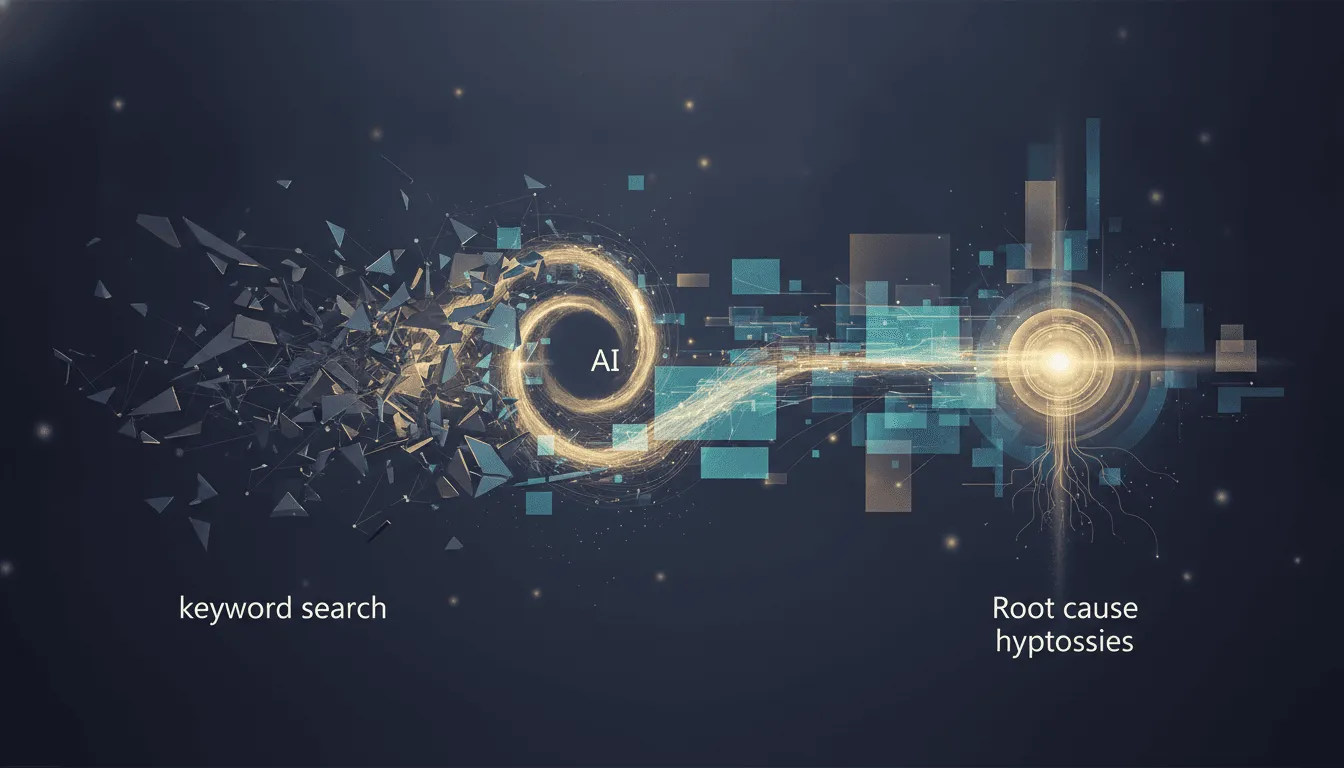
Alert correlation is arguably the most straightforward win for AI in incident response. AI‑powered correlation engines analyze streams of alerts, identifying patterns and grouping related notifications into a single, coherent incident. Instead of wading through dozens of distinct alerts for a single underlying failure, an on‑call engineer receives one consolidated incident with automated context—affected services, error codes, timestamps, and dependencies. This reduction in noise directly combats alert fatigue, allowing teams to focus on triage and remediation rather than manual correlation. But the technology is not foolproof. Correlation algorithms require tuning to the specific environment; misgrouping can happen when alert semantics overlap or when time windows are set too aggressively. This mirrors the notion of AI as a co‑pilot that standardizes starting points, as seen in hardware design where AI templates provide a structured baseline. The key is to treat correlation as a suggestion engine: the AI proposes a grouping, but the team reviews and adjusts before acting. Over time, feedback loops refine the model, improving accuracy and trust.
Once alerts are correlated into an incident, standardized triage becomes possible. AI‑driven chatbots can step in immediately, guiding on‑call engineers through runbook procedures: pulling logs, checking service health, and suggesting remediation steps based on historical patterns. This automation accelerates the initial response and ensures consistency, especially for common, low‑severity incidents. It also reduces the cognitive burden on engineers, freeing them to focus on complex analysis. Yet there is a hazard. Over‑automation can lull teams into a routine, causing them to overlook unusual symptoms that don't fit the model's expectations. The perspective of AI as 'normal technology'—a tool humans can and should control—is critical here. The chatbot should serve as a springboard, not a crutch. Engineers must retain the authority to deviate from the script when the situation warrants. This balance between efficiency and vigilance is the essence of effective human‑AI collaboration in incident response.
Even the best‑trained AI models produce false negatives—instances where the system mischaracterizes or entirely misses a critical incident. A slow memory leak, for instance, might be grouped with routine performance noise and automatically demoted. If the AI dismisses such alerts, the team may never see them until the system fails. To guard against this, human escalation paths must be baked into the process. Engineers need clear criteria for when to override AI groupings or responses—typically any signal that could indicate a high‑severity issue should be manually verified. Incident post‑mortems are a natural place to audit AI performance, examining where the model succeeded and where it fell short. This feedback loop refines the correlation and triage models over time. The principle of AI as normal technology applies here: the tool is under human control, and the ultimate responsibility for incident response rests with the team, not the algorithm. By institutionalizing human oversight, teams can enjoy AI's speed without sacrificing accuracy.
Integrating AI into incident response is a journey best taken incrementally. Rather than overhauling the entire operations stack, teams should embed AI capabilities into existing tools like PagerDuty, OpsGenie, or Slack—layering intelligence onto familiar workflows. A wise starting point is a low‑risk, non‑critical service. Run the AI in parallel (or 'shadow' mode) for a few weeks, comparing its correlations and triage suggestions against those made by human engineers. When accuracy meets team confidence, enable automated actions for routine, low‑severity incidents but require a human to approve any action on high‑severity ones. This co‑pilot approach, where AI suggests and humans decide, mirrors the best practices seen in other engineering domains. Every incident should feed back into the model: post‑mortems must include a review of the AI's performance, and tuning knobs should be accessible to the ops team. The 'normal technology' perspective reinforces this pattern—AI is a tool under human control, not a black box that makes final calls. With careful rollout and transparent feedback loops, AI becomes a trusted partner that reduces alert fatigue without sacrificing the nuance of human judgment.