Two Principles, One Force
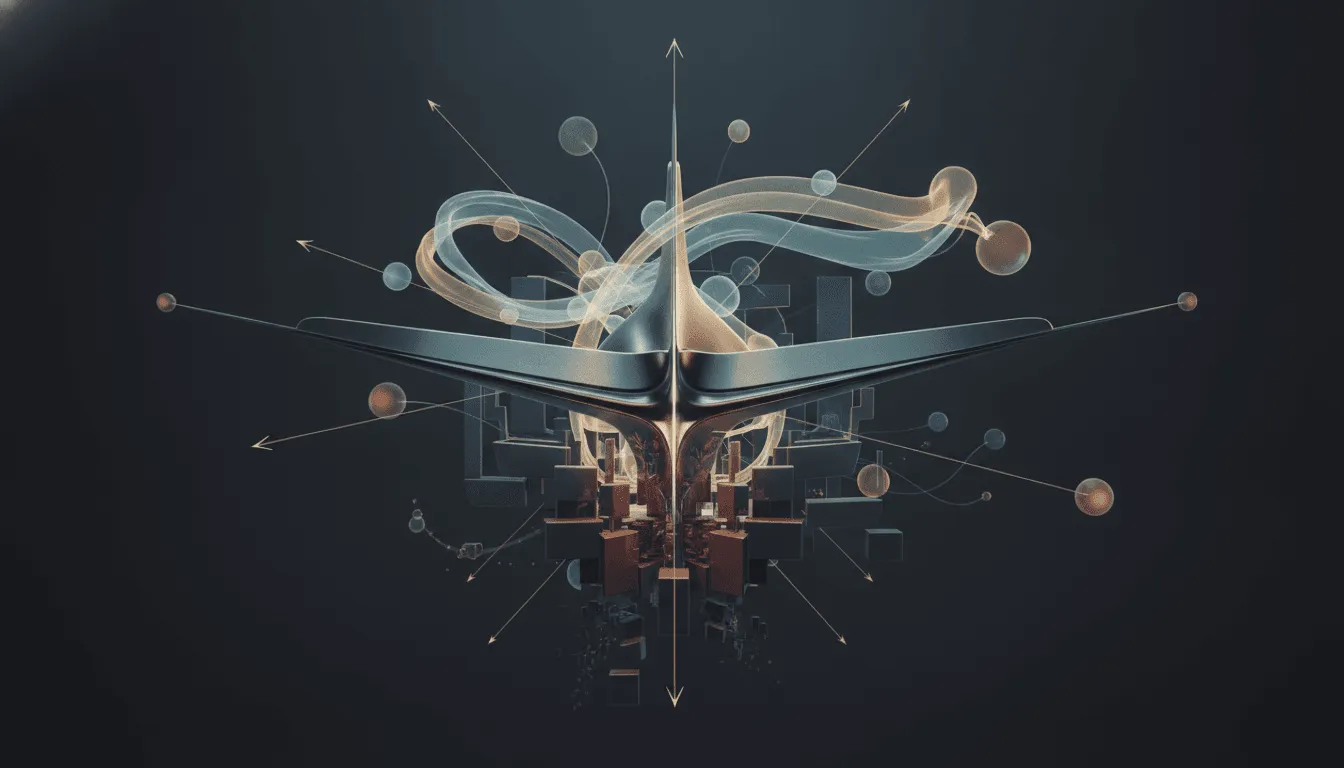
Lift is the upward force that keeps an airplane aloft. Two complementary principles explain it: Bernoulli's principle and Newton's third law of motion. Neither alone fully explains lift, and scientists still debate the complete mechanism. Lift is one of four forces acting on an aircraft, along with weight, thrust, and drag. In steady level flight, lift balances weight, and thrust balances drag.
The wing's shape and its motion through the air create a pressure difference and a downward deflection of air. Together, these effects produce an upward force. The angle of attack, the angle between the wing and the oncoming air, influences lift. Airspeed also matters. At a constant angle of attack, increasing airspeed increases lift. Both factors determine how much lift a wing generates. At takeoff, pilots rotate the aircraft to increase angle of attack, which raises lift until the plane leaves the ground. Increasing angle of attack increases both the pressure difference and the downward deflection of air, up to a stall point. Beyond that point, airflow separates and lift drops sharply.
Bernoulli's Principle: Pressure Differences
Bernoulli's principle states that as the speed of a fluid increases, its pressure decreases. Airplane wings are shaped so that air moves faster over the curved top surface than under the flatter bottom. This creates lower pressure above the wing and higher pressure below. The pressure difference produces an upward force.
The effect stems from the conservation of energy. The air's kinetic energy, or dynamic pressure, and its static pressure convert into each other, keeping total energy constant. As air speeds up over the top, its static pressure drops. The slower air below retains higher pressure, pushing the wing upward. The curvature of the upper surface accelerates the airflow, reducing its static pressure. Wind tunnel tests with pressure taps on the wing surface confirm that the pressure above the wing is lower than the pressure below. Wind tunnel measurements show that the pressure difference is not uniform across the wing's surface.
This pressure difference is one component of lift. It explains why the curved upper surface contributes to the upward force. However, it does not account for all lift, especially at high angles of attack. The shape alone is not enough; the wing must also deflect air downward.
Newton's Third Law: Deflecting Air Downward
Newton's third law states that for every action there is an equal and opposite reaction. The wing pushes air downward. The air pushes back upward on the wing with an equal force. This reaction contributes to lift.
The downward deflection of air, called downwash, is a direct consequence of the wing's shape and its angle to the flow. Downwash is visible as the air behind the wing moves downward. Faster airflow means more air mass passes over the wing per second, generating more downward momentum and thus more upward reaction. The upward force on the wing is equal to the rate of change of downward momentum of the air. Even a flat plate at a positive angle of attack can generate lift by deflecting air downward. This shows that Newton's third law is essential to the explanation.
The Equal Transit Time Myth
A common oversimplification claims that air over the top must travel faster to meet air below at the trailing edge. This is the equal transit time myth, and it is false. Air over the top does not necessarily take the same time as air below.
The myth persists because it offers a simple story. It ignores that the air above and below the wing do not have to arrive at the trailing edge simultaneously. In reality, the air above can move faster and still take longer or shorter time, depending on the flow. The myth is often taught in introductory physics courses, but it fails to explain the observed flow. A flat plate at a positive angle of attack generates lift, which the equal transit time myth cannot explain.