The Core Distinction: Temperature vs. Heat
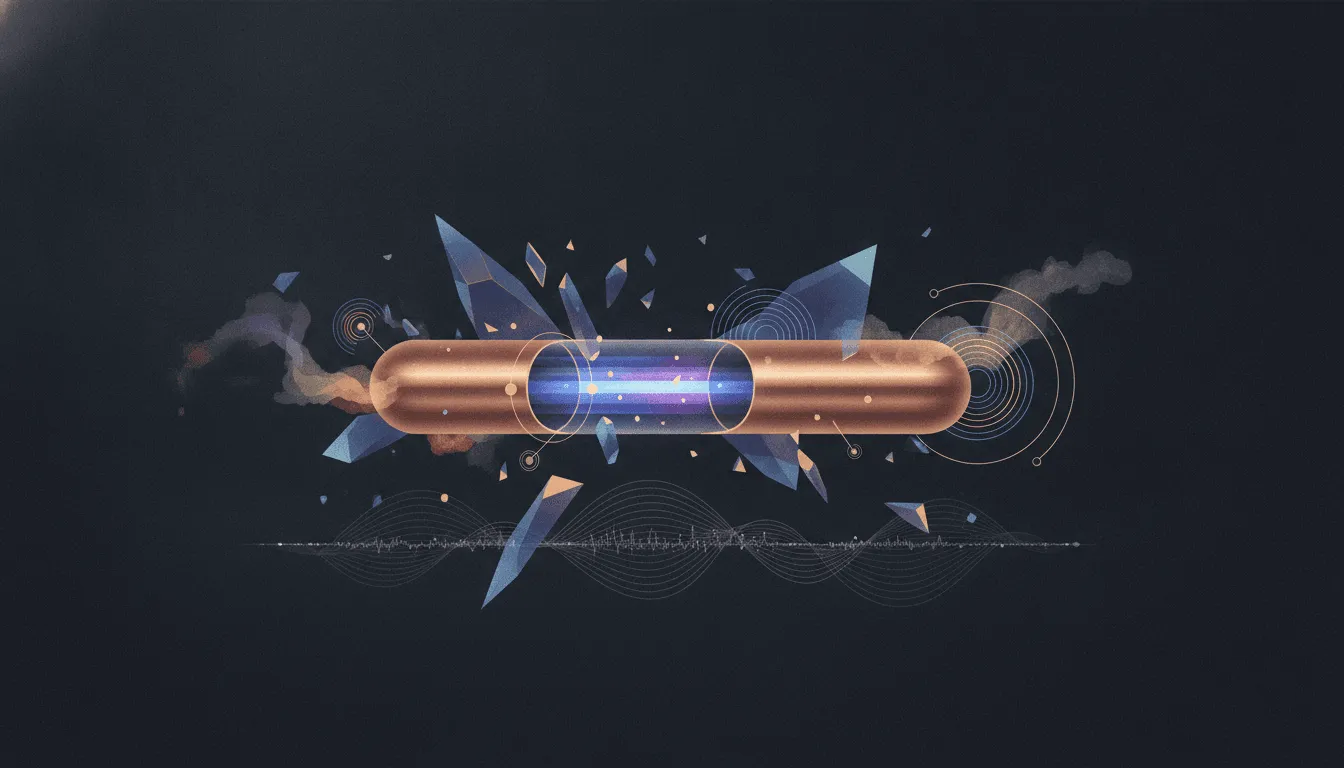
Temperature measures how hot or cold an object is relative to another object. It is a measure of the average kinetic energy of the particles in a system. Heat is different. Heat is the flow of thermal energy between objects that have different temperatures. A temperature difference is the cause of heat transfer, not the heat itself.
A single object has a temperature. That value tells you about the average motion of its particles. Heat does not work that way. Heat does not exist inside an object. It exists only during the transfer of energy from a hotter object to a colder one. When two objects touch, energy moves from the warmer object into the cooler one until they reach the same temperature. The energy that moves during that process is heat.
The everyday confusion is natural. A hot pan and a boiling pot of water both "have heat" in casual speech. In physics, the pan has a high temperature; the water has a high temperature. No heat is present until something cooler touches them. Then energy flows.
What Thermometers Really Measure
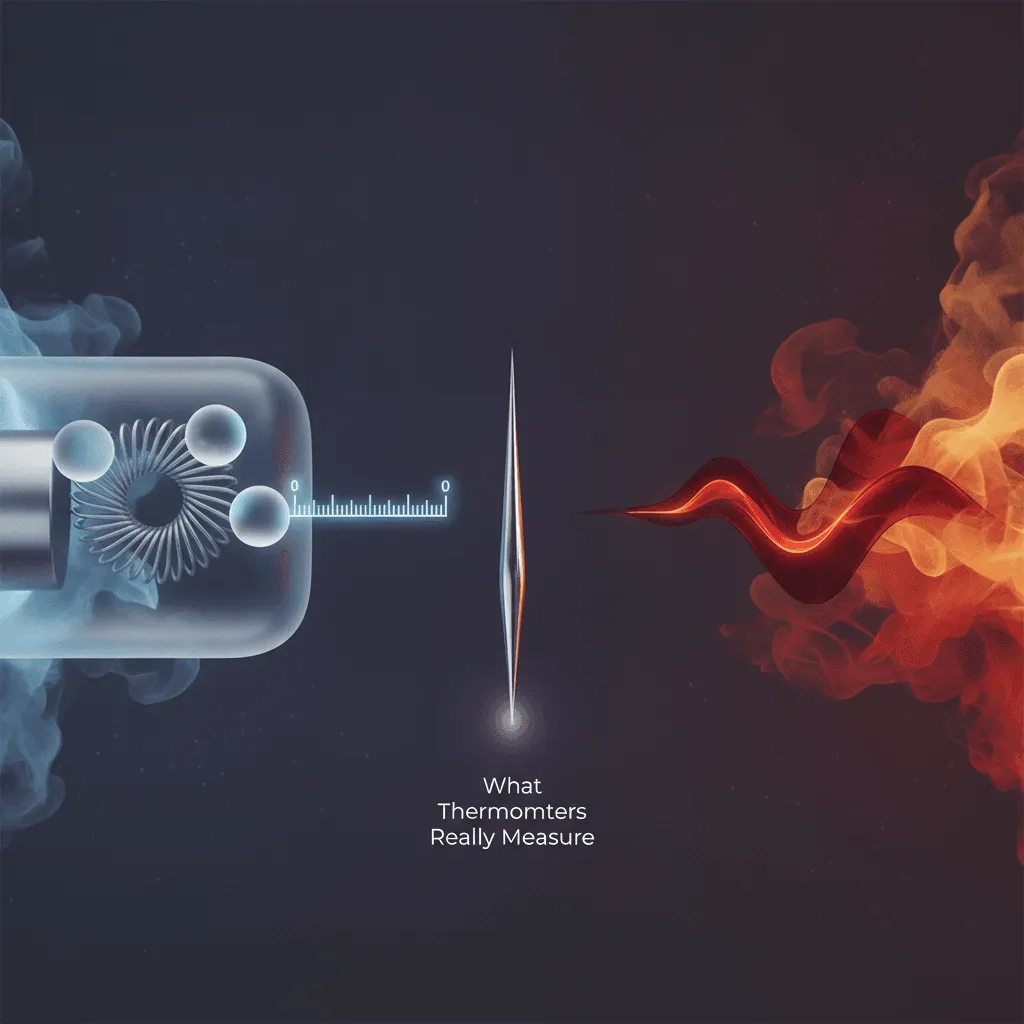
Thermometers do not detect heat. They detect a physical effect that changes predictably with temperature.
Mercury and alcohol thermometers rely on thermal expansion. A liquid sits in a reservoir at the bottom of a narrow tube. When the liquid warms, it expands and climbs higher in the tube. When it cools, it contracts and the column falls. The length of the column is the reading.
Other thermometers use other effects. A thermocouple produces a small voltage that depends on the temperature difference between its two junctions. An infrared sensor measures the radiation emitted by a surface, which strengthens as the surface gets hotter. Each design translates a temperature-dependent change into a number.
None of these devices captures heat directly. They all report temperature by way of a response to it. That is why a thermometer gives you an indirect reading of average particle motion, not a direct measurement of the thermal energy that moves as heat.
Absolute Zero and the Lower Limit
Absolute zero is the lower limit of temperature. It is the state at which particle motion reaches its minimum. The Kelvin scale starts there, at 0 K, which equals -273.15 degrees Celsius. Kinetic theory gives this value a clear meaning: a gas's temperature reflects the average kinetic energy of its molecules, so cooling the gas lowers that average until it approaches a floor.
That floor is absolute zero. No real system reaches it, but it remains a natural reference because it does not depend on the properties of water or any other substance. Unlike the zero points on Celsius or Fahrenheit, which are chosen for convenience, 0 K is defined by physics itself. At absolute zero, the average kinetic energy of particles is as low as it can go. This does not mean temperature and heat are identical; it simply means that no further thermal energy can be extracted by cooling. The lower the temperature, the less thermal energy is available for transfer.
Why Scales Matter: Celsius, Fahrenheit, Kelvin
Celsius and Fahrenheit are practical scales. Celsius sets 0° and 100° at the freezing and boiling points of water, which makes it handy for weather, cooking, and biology. Fahrenheit uses a different set of reference points that produce finer gradations, which is why it persists in daily contexts in some countries.
Kelvin is an absolute scale. Its zero is absolute zero, so it does not depend on the properties of any particular substance. That makes it the natural unit for scientific calculation. Thermodynamic equations are built around absolute temperature; using Celsius adds a constant that can obscure relationships.
The heat-temperature distinction explains why both kinds of scales exist. A relative scale tells you whether you need a jacket; an absolute scale tells you how much thermal energy is present. Daily life needs comfortable, relative scales. Science needs a scale that starts at a real physical limit and measures how much thermal energy is available to do work.