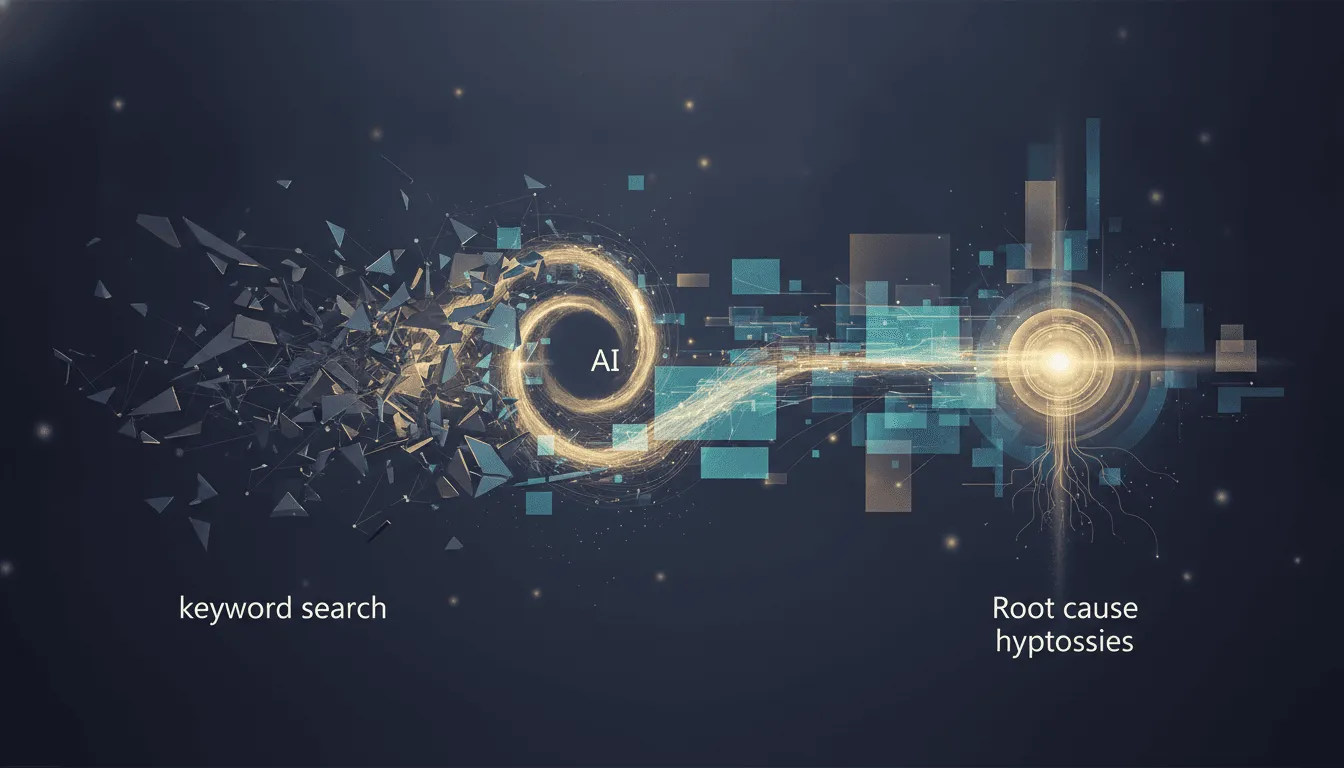
Traditional agile retrospectives rely heavily on the team's recent memory. A sprint that ended two weeks ago often gets evaluated based on the most vivid events—the last-minute bug, the heated debate—while longer-term patterns fade. This recency bias can lead teams to treat symptoms rather than root causes. By contrast, an AI assistant can process months of sprint data, commit history, and incident logs to surface trends that human recall misses. For example, it can flag a steady decline in throughput, a recurring blocker in the same subsystem, or a pattern of rework where pull requests consistently modify tickets from previous sprints. The machine does not replace the facilitator; it acts as a second set of eyes that highlights patterns the team can then discuss. The conversation remains human-driven, but now it is informed by data across many iterations.
A well-built AI retrospective tool can also correlate disparate data sources. It might detect that a spike in deployment failures coincides with the introduction of a new microservice, or that code review turnaround slows down after noon on Fridays. These are the kinds of context-sensitive insights that a human facilitator might never consciously perceive. The output is a set of talking points—not commands. The team still interprets the 'why' and decides the 'what next'. In this role, AI is not an oracle but an amplifier of collective intelligence, much like the pragmatic adoption described in the framework of AI as Normal Technology.
The first step in building an AI retrospective assistant is extracting clean data from your engineering tools. Start with your project management platform like Jira: collect issue types, cycle times, status transitions, and blocker tags. Next, pull commit history from GitHub—frequency, message patterns, and the size of diffs. CI/CD logs provide deployment frequency, failure rates, and rollback events. The goal is to focus on metrics that indicate process health, such as throughput trends (number of stories completed per sprint), blocker recurrence (the same ticket type blocked repeatedly), and rework (commits that unambiguously modify a ticket from a prior sprint). Always aggregate personally identifiable information and request team consent before mining personal commit messages or comment history. This ensures compliance and builds trust.
Once collected, the data must be preprocessed into a structured format—typically a time-series table with sprint-level aggregates. For example, you might compute 'average cycle time per sprint', 'number of blockers by component', and 'percentage of PRs that involve rework'. These metrics can then be fed into a language model via an API. It is also wise to retain qualitative context: the AI should know that a spike in blockers coincided with a major dependency upgrade. Without this contextual framing, the numbers alone can mislead. Tools like Airflow or custom scripts can automate this pipeline, running on a schedule before each retrospective.
With structured metrics in hand, the next step is to use a large language model (LLM) to generate narrative summaries. A common approach is few-shot prompting: provide the model with a few examples of desired output—for instance, 'In sprint 12, cycle time increased by 20%, primarily due to the new authentication module.' Then feed it the actual metrics for the current sprint. The model can produce a bullet-point list of trends and anomalies. It is also possible to perform sentiment analysis on retrospective comments using a pre-trained classifier or the LLM itself. Over several sprints, the sentiment trend can indicate whether morale is improving or declining. The output should be plain language that the team can quickly digest. For example: 'Blocker count is down 30% thanks to the new testing pipeline, but rework in the payment service has doubled—consider dedicating a spike to refactor it.'
The LLM's role is to translate numbers into human-readable insights, but it should never invent facts. Therefore, the prompt must instruct it to strictly base its summary on the provided data. One technique is to break down the prompt into three parts: context (the team and sprint), metrics (the structured data), and instruction (output format). Some teams also use the LLM to generate discussion questions: 'Why do you think rework increased? What would be one experiment to reduce it?' This way, the AI contributes to the conversation without dominating it.
The true value of AI in retrospectives is realized when its insights are woven into a human-facilitated discussion. The facilitator should present the AI-generated trends as starting hypotheses, not as objective verdicts. For instance, instead of saying 'The algorithm says your review turnaround is slow,' frame it as 'The data shows code reviews took longer this sprint. What changed?' This avoids triggering defensiveness and keeps the focus on understanding. The team must own the interpretation of patterns. A common pitfall is to blindly trust AI recommendations without debate. Action items should always emerge from team consensus, not from a model's suggestion. AI can propose possibilities—'try pairing on reviews'—but the team must decide if that fits their context. This balance between data-driven suggestions and human judgment is what makes the retrospective effective.
Furthermore, the AI assistant can be used to track the outcomes of previous action items. It can automatically check if a metric improved after a change was implemented, closing the feedback loop. For example, if the team agreed to limit work-in-progress, the AI can report whether cycle time decreased in subsequent sprints. This continuous monitoring turns the retrospective from a monthly event into an ongoing process improvement cycle. The key is to maintain a curious, blameless tone—AI highlights correlations, not causes, and the team explores the root causes together.
While AI can be a powerful asset, over-reliance on quantitative metrics can obscure qualitative context. A high number of blockers might be due to a single, unusually complex issue rather than a systemic problem. Similarly, if the historical data used for training the model contains biases—such as always labeling certain team members' contributions as high risk—the AI may reinforce those biases in its outputs. Regularly review outliers and question the data.
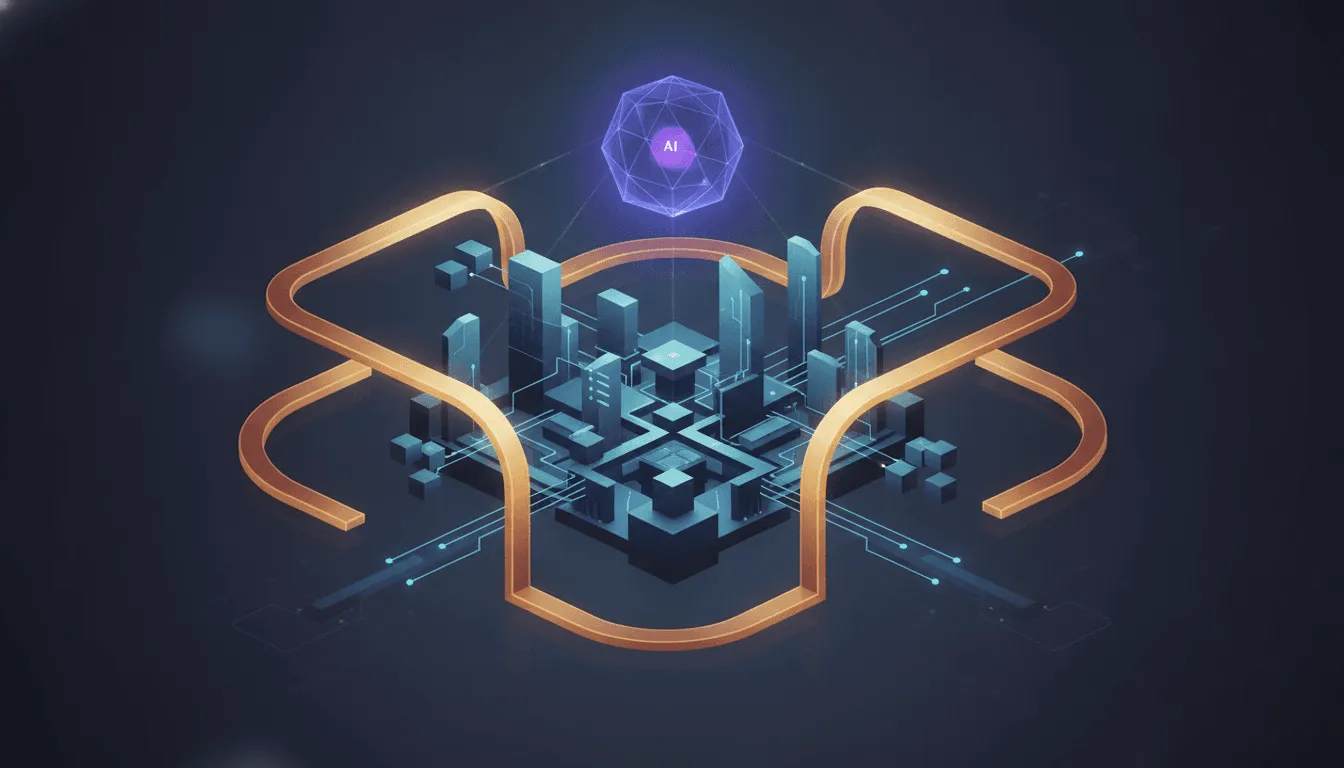
For a lightweight setup, start with a simple script that extracts data via the Jira and GitHub APIs, processes it with a Python script that calls an LLM (like GPT-4), and outputs a markdown file. This approach aligns with the principles of loop engineering, where the agent iterates on feedback. The facilitator reviews this file before the retrospective, selects the most relevant insights, and presents them to the team. Strong privacy practices are essential: use anonymous aggregate metrics, and never store raw commit messages or personal feedback outside a secure environment. Iterate based on team feedback—if the AI suggestions miss the mark, adjust the metrics or prompt. This keeps the tool aligned with the team's needs rather than dictating them.
Also consider the risk of algorithmic bias. For instance, if the model was trained on open-source projects with different cultural norms, it may generate suggestions that don't fit your team's dynamic. Always ground the model's output in your own data and context. Another pitfall is metric fixation: teams may start optimizing for the AI's highlighted numbers (e.g., reducing cycle time at the expense of quality). To mitigate this, pair quantitative insights with qualitative ones, such as sentiment trends or anecdotal comments. A practical blueprint: use a Jira webhook to push sprint data to a cloud function that triggers an LLM summarization. The summary is posted to a Slack channel before the retro. The entire pipeline can be built in a day with no specialized infrastructure. Finally, ensure that the team understands the AI's limitations: it can spot patterns but cannot know the stories behind them. The best retrospectives blend data with human empathy, and AI serves as the spark that ignites deeper conversation.