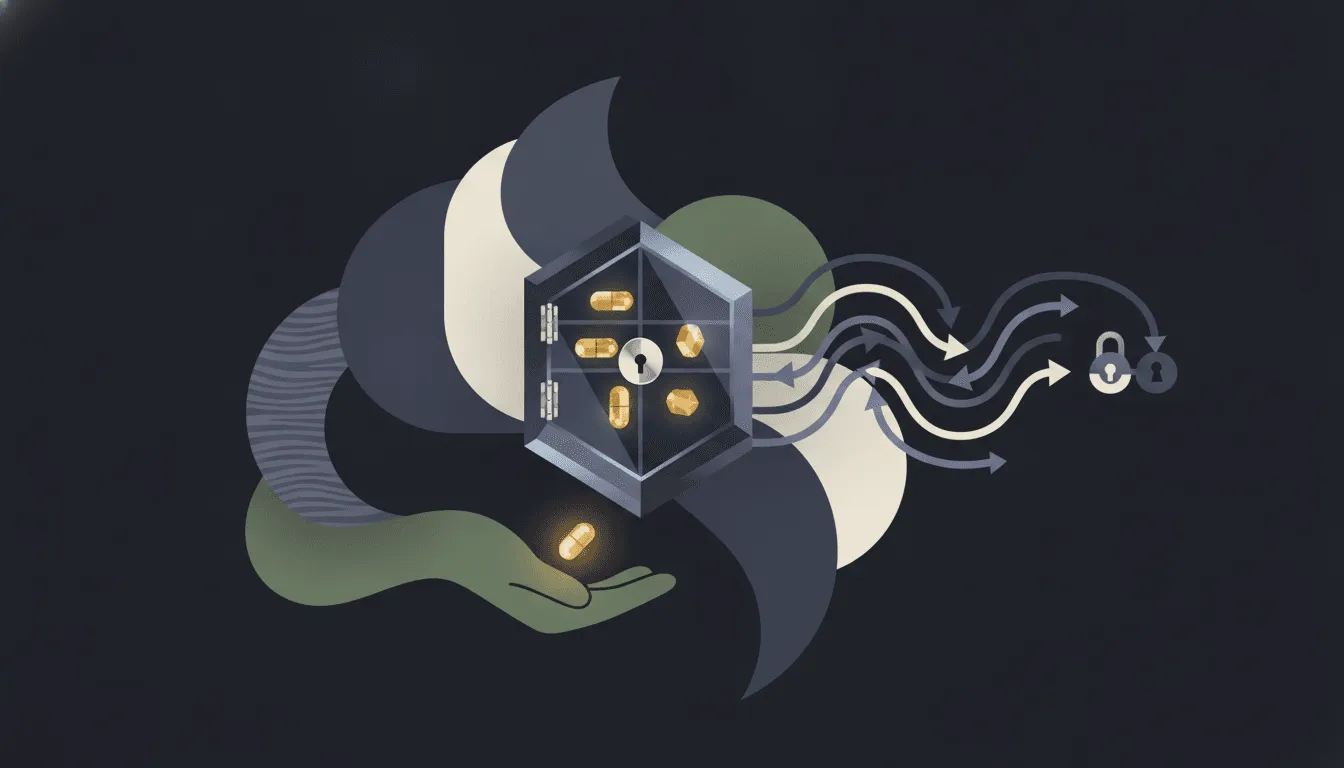
Most medications belong in a cool, dry place, away from heat, humidity, and direct sunlight, and they should stay in their original packaging so the label and instructions travel with the drug.
The bathroom cabinet is the wrong default. Showering pushes humidity and temperature up and down repeatedly, and that cycling degrades many drugs faster than a stable room would. Humidity can make tablets sticky or crumble and cause capsules to soften. A car is worse: leaving medications in a car during hot or cold weather can damage them. Direct sunlight degrades a smaller set of drugs, so a closed cabinet beats a sunny windowsill. Light-sensitive drugs often come in amber or opaque containers; keep them in those containers and store them away from windows.
A smaller group needs cold storage. Eye drops, liquid antibiotics, insulin, and hormonal medications typically belong in the refrigerator between 2°C and 8°C. Place them in the middle of the fridge, not the door, where opening and closing swings the temperature, and never in the freezer. Freezing can damage certain medications and reduce their effectiveness. A sealed container keeps them separated from food. A refrigerator thermometer can confirm the temperature stays in range.
Access is the other half of storage. A locked cabinet, lockbox, or medication safe keeps drugs away from children and pets and limits who can reach them; give the key or code only to trusted adults. A combination lock removes the risk of a lost key. Skip the purse, the nightstand, and the easy drawer. Those are the places a curious child or a visiting guest finds first. Check expiration dates before each use; expired medications may lose potency or, in some cases, become toxic. Never combine different medications in one bottle, as you risk confusing them and losing the label instructions. If you transfer pills to a weekly organizer, keep the original bottle or a copy of the label.
Storage keeps a drug stable. Timing and knowledge keep you safe while taking it. For each medication, know what it treats, how and when to take it, whether food changes how it works, and what side effects to expect. "With food" and "empty stomach" are not interchangeable instructions. For example, some thyroid medications must be taken on an empty stomach, while certain pain relievers are easier on the stomach with food.
If new symptoms appear, such as dizziness, fatigue, or poor sleep, treat them as a possible medication effect and ask a healthcare provider whether a drug could be responsible. That is a question, not a verdict. Keep a written record of any new symptoms, including when they start and how long they last, to give your provider a clear picture.
Interactions are the quieter risk. Before starting any over-the-counter drug, vitamin, herbal supplement, alcohol, or new food, ask how it interacts with what you already take. Supplements count even though they sit outside the prescription system. Even common over-the-counter drugs like antacids can interfere with prescription medications; ask your pharmacist before combining them. Alcohol is a common interaction: it can intensify the sedative effects of some drugs and increase the risk of stomach bleeding with others. A pharmacist can check your whole list against the new item in one conversation, and reading from a written list makes that check fast. Using a single pharmacy for all your prescriptions helps them catch interactions, because they have your complete profile.
Missed doses usually trace back to a routine that leans on memory. Move the routine outside your head.
A pill organizer sorted by day and time turns "did I take it?" into a glance. Fill the organizer at the same time each week, such as Sunday evening. Phone alarms cover doses that fall outside your normal rhythm. Know what to do if you miss a dose, since instructions vary by medication. If you miss a dose, do not double the next one unless a healthcare provider tells you to. Some medications require you to take the missed dose as soon as you remember, while others should be skipped. Some drugs have a narrow margin between an effective dose and a harmful one, so follow the label's missed-dose instructions exactly.
Keep one written or digital list of everything in the house, prescriptions and supplements both, and bring it to appointments. Include the dose, frequency, and prescriber for each medication on your list, and update it whenever anything changes. Count pills on a regular schedule; a count falling faster than the label predicts can flag a dosing error or a short supply. Note refill dates for the same reason: they show actual use against expected use. Set a reminder to refill prescriptions a few days before you run out, so you never miss a dose due to an empty bottle.
Unused and expired medications should never go in the household bin or down the toilet. A loose bottle in the trash can be found by a child or a pet before collection. Never flush medications down the toilet unless the label specifically instructs you to, as some drugs can contaminate water supplies.
The first choice is a take-back: a local pharmacy drop box or a community take-back program. Many pharmacies and police stations have permanent drop boxes; you can also look for DEA take-back events in your area. Call ahead to confirm what the drop box accepts, since some programs take controlled substances and others do not. If none is nearby, ask a pharmacy about mail-back envelopes or follow FDA at-home disposal instructions, which explain how to make what you throw away less retrievable. The FDA at-home disposal method usually involves mixing the medication with an undesirable substance like dirt, cat litter, or used coffee grounds, sealing it in a plastic bag or container, and throwing it in the household trash. Before disposal, remove or scratch out personal information on the label.
Shrink the problem at the source. Request a partial fill when a prescriber starts you on something new or changes a dose; a small supply at home beats a large bottle you may never finish. If someone in the household is in a mental health crisis, temporarily remove or lock up all non-essential medications, and keep essential ones under the same access control as everything else.