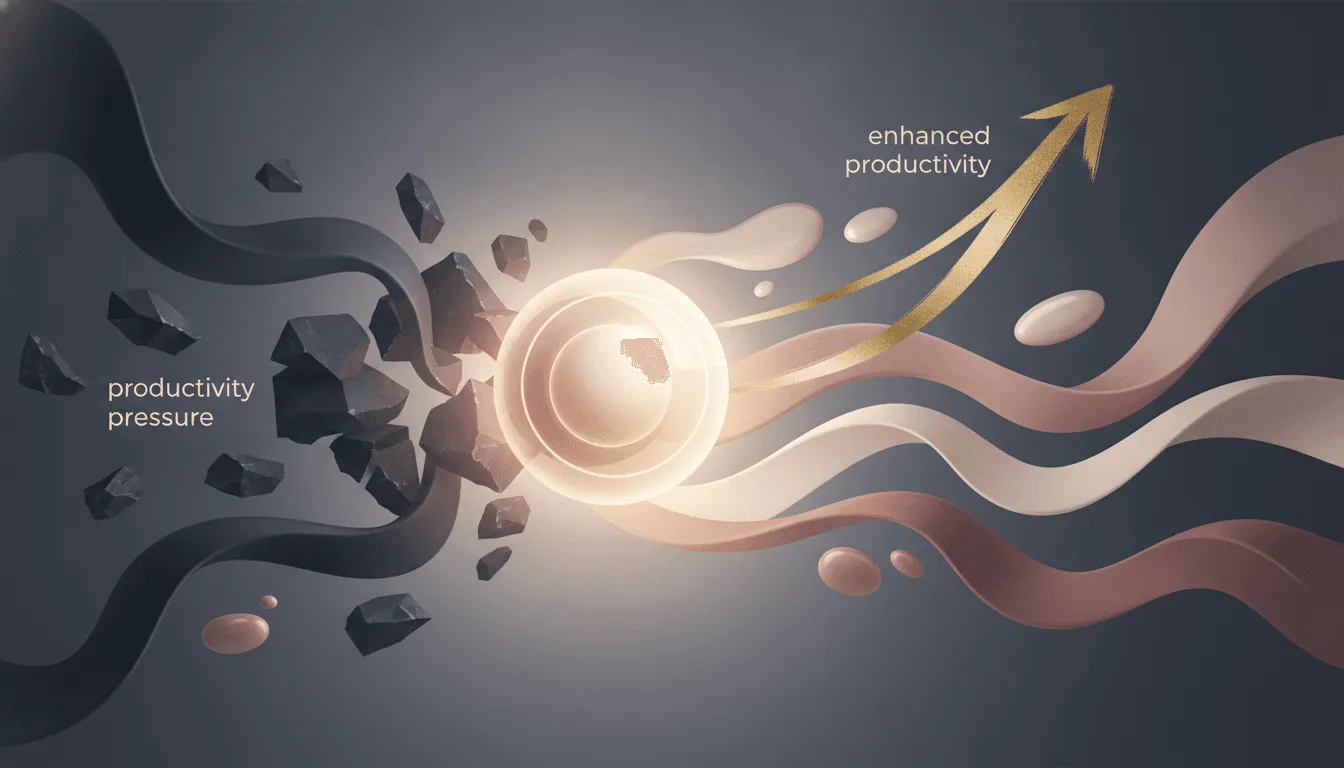
The Shame and Procrastination Cycle: Why Self-Criticism Backfires
Harsh self-criticism does not produce motivation. It produces shame, and shame produces avoidance: shutdown, anxiety, procrastination, burnout. The mechanism is a threat response. When you believe you are worthy only while performing, achieving, or perfecting, you disconnect from yourself, which makes it harder to trust your decisions or believe you can reach your goals. The brain stays in fight, flight, or freeze instead of the grounded state where reflection and decisions are possible. The inner critic promises discipline and delivers paralysis, then adds a second layer of pain about the paralysis itself. That second layer is the costly part. It converts one missed task into a verdict about the self, and verdicts are not actionable. The threat response has a physical signature you can learn to catch: a tight chest, a clenched jaw, the sudden urge to close the laptop and check something else. A productivity system imposed on top of a running threat response works against the person using it. Reducing the threat is the precondition for the output.
Research cited by Neff and others finds that self-compassionate people report less anxiety, depression, and stress, and show greater resilience. They also ruminate and perfect less. Both habits postpone finished work in ways you can spot. Rumination replays the mistake: rehearsing the failure instead of the fix, re-arguing a conversation that already happened. Perfectionism stalls the handoff: polishing work that is already adequate, delaying a draft that only needs to be sent. Self-compassion appears to support motivation and personal growth through constructive self-criticism, which evaluates the work, rather than self-flagellation, which attacks the worker.
What Self-Compassion Actually Is, and Isn't
Kristin Neff defines self-compassion through three elements: self-kindness instead of harsh self-judgment, common humanity, and mindfulness. Common humanity is the recognition that struggle is part of a shared human experience, not proof that you are uniquely broken. Mindfulness, in this definition, means noticing a thought as a thought rather than as a fact. Tara Brach adds radical acceptance, which means being with what is rather than judging it or pushing it away. None of that is the same as avoiding accountability. Self-compassion means acknowledging a struggle without adding more pain to it, and responding to your own imperfection with the kindness you would offer someone you care about. The practical difference is direction: self-criticism attacks the person, self-compassion addresses the problem. The common myth that this makes people soft or less motivated does not hold; the evidence paints self-compassion as a strength, not a shortcut. It changes the tone of the inner voice, not the standard you hold. You can hold a demanding standard and still refuse to treat every miss as evidence of personal failure.
Practical Exercises and Avoiding the Gentle Excuse Trap
Self-compassionate self-talk is the most direct practice. When you catch a harsh inner line, replace it with the language you would use with a friend in the same situation. The replacement should be specific and honest, not vague praise. "I always ruin everything" becomes "I missed the deadline, and I can tell my manager today." "I'm an idiot for sending that" becomes "I sent a draft with an error, and I can send a correction now." Reframing setbacks follows the same logic: name what happened without adding shame, then shift to the constructive next step. A missed deadline is a scheduling problem to fix rather than a character verdict to carry, and the wording you choose decides which one you have.
The risk is the gentle excuse trap: using soft language to avoid hard work. The distinction is what the kindness is for. Compassion aimed at reducing shame clears the path to action. Compassion aimed at avoiding discomfort becomes another form of procrastination. Telling yourself you deserve a break is self-compassion when the break restores capacity. It is avoidance when the break is the task you keep choosing over the work. Before accepting a kind response as self-compassion, ask what it does to your next action. If a kind response leaves you further from the work, it is not self-compassion; it is avoidance wearing its clothes. Used well, the practice removes the threat that stalls you and keeps the standard intact.