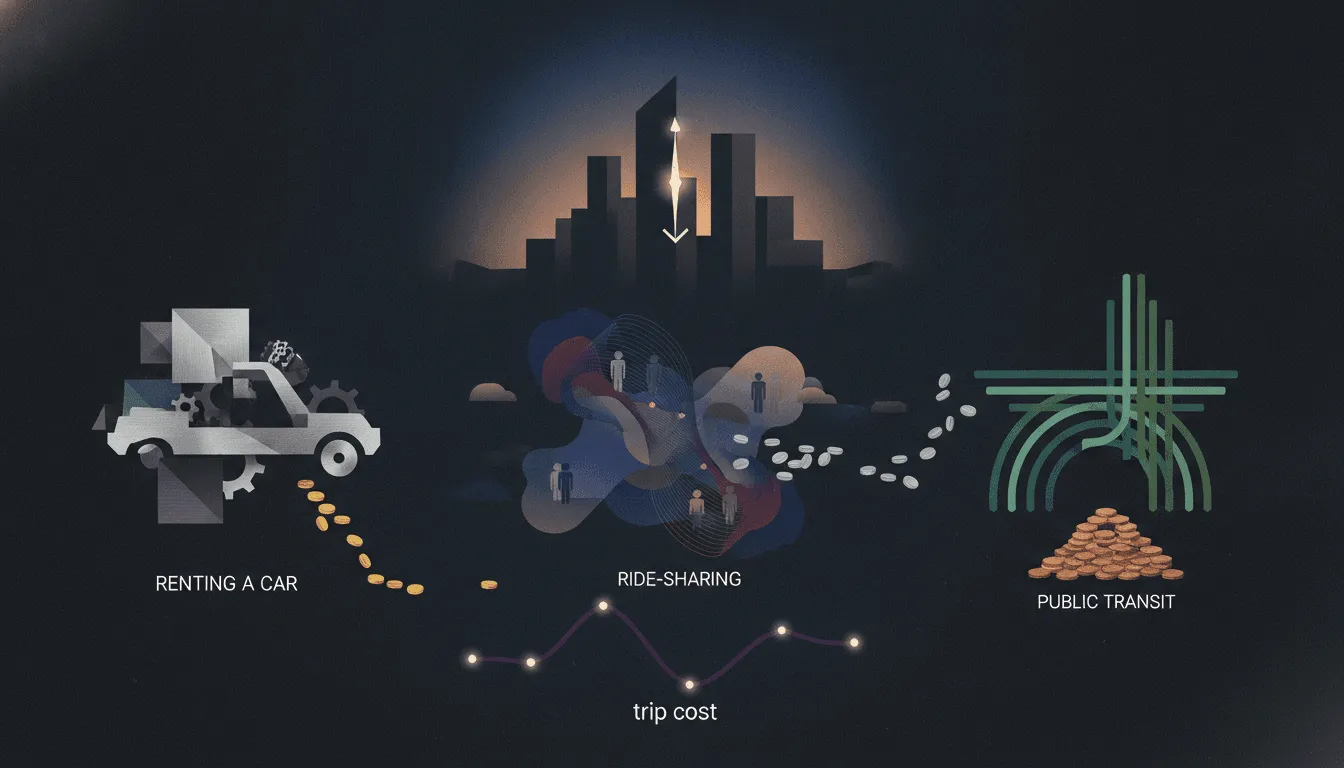
In Singapore, an economy car rental runs $50 to $80 per day before anything else. Insurance adds $10–25, fuel $15–30, parking $10–40, and ERP tolls $5–20. The full daily total lands between $90 and $195. ERP tolls are congestion charges that apply on major roads during peak hours, and they add up quickly if your route crosses the central business district.
The money is only part of the cost. Time spent circling for parking in a dense city, stress from navigating unfamiliar roads, and liability for damage or accidents all offset the convenience of a personal vehicle. A European travel blog notes that renting can beat several train or bus tickets in some cases, but the total rises once insurance, tolls, parking, and fuel are factored in.
Rental makes sense for groups of three or more splitting the bill, families needing car seats, or itineraries that visit multiple destinations in a single day. For a solo traveler, the math rarely works in the rental's favor. The door-to-door flexibility is real, but in a city with a developed transit network, it buys less than travelers often expect.
Ride-sharing services like Grab in Singapore offer an alternative to taxis and public transport, but published figures for typical city-trip costs are scarce. Prices fluctuate with surge pricing, tips, and distance. The lack of published data means travelers must estimate carefully, comparing quoted ride prices against transit fares for the same route. The convenience of door-to-door service is the main draw.
Surge pricing during peak hours or after events can push a single fare well above its off-peak rate. That makes ride-sharing a premium option. It works well for short, time-sensitive trips, or when you're carrying heavy luggage. For routine point-to-point travel, it rarely beats public transit on price. One caution: a figure of $0.16 per trip-mile sometimes appears in discussions of future autonomous pooled taxis. That's speculative research, not a rate you can budget against today.
Singapore's MRT and bus fares range from $0.90 to $2.50 per trip. A daily tourist pass costs $10 to $20 and caps your total daily transport spend at that level. The savings compound over a multi-day trip, and the pass price makes budgeting simple: the transport cost is known before leaving the hotel.
Transit riders can read, plan, or rest during the ride, and journey times on a well-run network are predictable. Those advantages matter most in cities with developed transit systems like Singapore. Transit also works well for first-time visitors, since routes and stops are clearly marked and apps provide real-time arrival information. For solo travelers and small groups on a budget, transit is clearly the cheapest option.
Start with your itinerary. Count the trips you'll make in a day: hotel to museum, museum to lunch, lunch to another site, and so on. Multiply by the average fare. Four trips at $1.50 each comes to $6. Compare that to a rental car's $90–195 daily total. The formula works for any city: replace the fares with local rates and the rental total with local quotes.
For ride-sharing, estimate the per-mile rate and add a surge factor for peak hours. Compare that to the same routes on transit. The convenience premium becomes measurable, making the tradeoff explicit.
The decision rule: transit wins for solo travelers and small groups. Rental wins for groups of three or more, heavy luggage, or multi-stop days. Ride-sharing is the premium choice for short, time-sensitive trips.
To save more, buy multi-day transit passes, use car-sharing services for occasional trips, and combine modes: transit for core routes, ride-share for late-night or off-route destinations. For more on stretching a transport budget, see Getting Around on a Budget. Budget travelers can also plan transport alongside other costs with A Practical Guide to Budget Travel Planning for Independent Travellers.