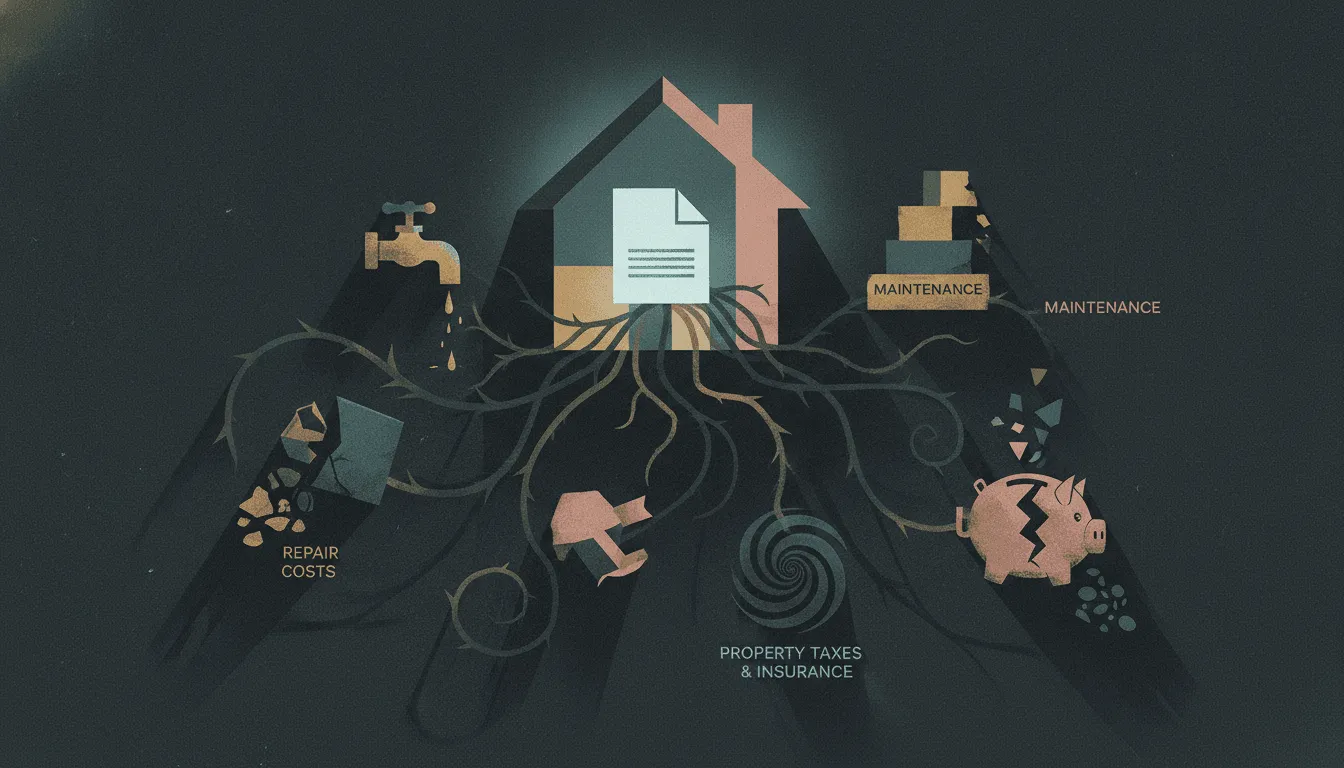
The mortgage payment is only one line in a homeownership budget. Property taxes, insurance, maintenance, utilities, and association fees add thousands to annual costs, and first-time buyers routinely overlook them. A line-item framework makes the true cost visible before you commit. The four cost categories below cover the recurring expenses that surprise buyers most; a fifth section outlines a savings protocol. The cost ranges reflect New York data, but the categories apply everywhere: estimate each line, add a buffer, and test the total against your income before you sign. Compare renting versus buying only after you have built the full ownership budget. The math is straightforward: add the annual totals for each line, divide by twelve, and compare the result with your monthly take-home pay.
Property Taxes: A Variable That Can Shift Your Budget
Property taxes are the most location-dependent cost in a homeownership budget, and buyers routinely underestimate them. In New York State, the average effective property tax rate is about 1.69 percent. Rates across New York City boroughs range from 0.88 to 1.2 percent, so the same home value produces very different bills depending on where it sits.
On a $600,000 home in Queens, that translates to roughly $5,000 to $7,200 per year, or $400 to $600 per month. A buyer who budgets only the mortgage payment will feel that gap immediately.
Reassessments can raise taxes, so budget a buffer above your current payment. Escrow spreads the annual bill across twelve monthly payments, which smooths cash flow but can obscure the true annual cost. Even when your lender collects property taxes through an escrow account, track the due dates and confirm the amounts yourself. An unanticipated reassessment can change your monthly escrow payment without warning.
Homeowners Insurance: Coverage and Typical Premiums
Homeowners insurance typically runs $1,000 to $2,500 annually in New York, depending on coverage and location. The policy covers damage to the structure and personal property, but it does not cover everything.
Flood and earthquake insurance may be needed in certain areas, and standard policies exclude those risks. Read the policy limits and compare quotes from multiple carriers, not just the one your lender recommends, before you close. A gap between what you assume is covered and what the policy actually covers can be expensive to discover after a claim. The cheapest premium is not always the best value if the coverage limits are low.
Maintenance and Repairs: The 1–3% Rule
Maintenance and repairs are often the largest hidden cost of ownership. A common budgeting rule is to set aside 1 to 3 percent of the home's value each year, though some estimates go as high as 4 percent. For a $600,000 home, that means $6,000 to $18,000 annually.
Specific costs illustrate the range. HVAC servicing runs $200 to $500. Roof repairs cost $500 to $2,000 or more. Plumbing issues can add $150 to $800 per incident. These are individual line items; a year with a roof repair and a plumbing failure can exhaust the maintenance budget quickly.
Routine upkeep prevents larger, costlier repairs down the line. A small leak fixed early costs far less than water damage to walls, floors, and foundations. Budget for the annual maintenance tasks, not just the emergencies, and treat the 1 to 3 percent as a floor rather than a ceiling. The rule works as a planning tool, not a precise forecast; actual spending will vary year to year.
Utilities, HOA Fees, and Other Recurring Costs
Utilities add another $210 to $520 per month in New York. Electricity runs $80 to $150, gas $30 to $80, water and sewer $40 to $100, internet and cable $60 to $150, and trash collection $20 to $40 when it is not included in taxes. Some municipalities include trash collection in property taxes; others bill separately, so confirm which applies in your area.
Condo and co-op owners face HOA or maintenance fees ranging from $400 to $1,500 or more per month, covering building upkeep and amenities. The range reflects differences in building size, amenities, and services, and fees can rise with building costs.
Utility bills vary with home size, climate, and occupancy. Monitor your usage and consider energy-efficient appliances; over time they can meaningfully reduce monthly bills. A larger home in a colder climate will land at the high end of every range.
Build a Maintenance Fund Before You Move In
Set up a dedicated maintenance emergency fund before closing, separate from your down payment and closing costs. Use the maintenance budget you calculated for your home's value as a guide and deposit that amount monthly into a separate account. The maintenance fund is not optional spending; it is a fixed line in the ownership budget, like the mortgage and the insurance premium.
Track your actual spending over the first year and adjust the monthly deposit accordingly. Some years will be light; a major repair year can consume several years of savings at once. The fund exists to absorb that variance without forcing you to borrow.
A maintenance fund also complements a general emergency fund. The two serve different purposes: the emergency fund covers income loss and unexpected life events, while the maintenance fund covers the home specifically. Both deserve a place in your monthly budget.
This article is for educational purposes and does not constitute financial advice.