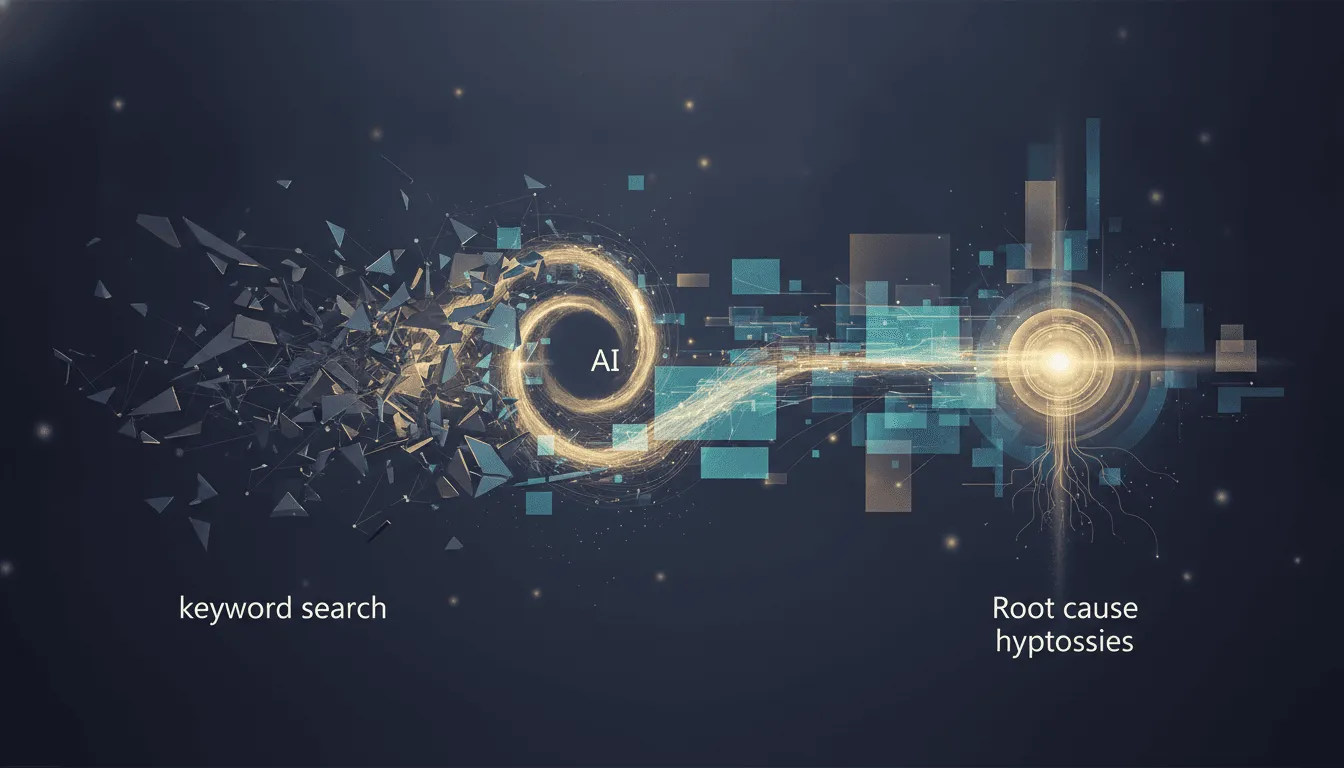
At 2:47 AM, a production alert fires. The stack trace is a familiar nightmare: a NullPointerException buried under thirty lines of internal calls, the real culprit obscured. The engineer on call has never touched this module. Pasting the trace into an AI assistant, they get back not just a translation, but a pinpoint explanation: "The customerId parameter is null in the checkout flow. This is likely because the session cache was cleared before order validation. Common fix: add a null check before accessing cache — see line 42 of CheckoutService.java." The AI doesn't replace the engineer; it does the grunt work of decoding context so the human can decide and act. This capability is one of the most promising applications of AI debugging tools. It aligns with the broader trend of AI as a practical co-pilot that augments human workflows rather than replaces them. For SREs, AI can correlate error logs and provide immediate context, reducing mean time to resolution. Developers can paste stack traces into AI assistants or use built-in IDE plugins that analyze errors as they occur. Some tools rank potential causes by probability, letting engineers focus on the most likely issues first. This integration into existing workflows underscores a view of AI as a normal technology: a tool we remain in control of, integrated slowly and pragmatically into existing practices.
AI tools are powerful amplifiers of human capability, not replacements.
LLMs can be integrated directly into IDEs and issue tracking systems to provide real-time explanations. By leveraging context from the codebase, documentation, and known patterns, they can suggest relevant fixes. For example, when a crash occurs, the AI can examine the stack trace, cross-reference it against internal APIs and error dictionaries, and propose changes to the code. This integration fits seamlessly into existing human workflows without requiring a fundamental change in how developers work. Some teams use AI to automatically categorize errors by severity and suggest priority order, aligning with the shift from building larger models to deploying smaller, targeted ones for specific tasks like error analysis. As TechCrunch reported in early 2026, the AI industry is moving from hype to pragmatism, with a focus on targeted deployments that augment human work. In debugging, this means using purpose-built models trained on vast repositories of error-prone code, rather than relying on generic chatbots. This targeted approach ensures that AI debugging tools provide accurate and context-aware explanations, making them valuable additions to the developer's toolkit.
Despite their promise, AI-driven error analysis comes with significant caveats. Uncommon or highly specific errors may confuse LLMs, leading to incorrect or misleading explanations. Because these models are trained on general codebases, they may struggle with proprietary libraries or domain-specific logic. Sending proprietary code to cloud-based AI services raises privacy and security concerns, especially for organizations handling sensitive data. Many enterprises are hesitant to expose their code to external services, preferring on-premises or hybrid solutions. Moreover, over-reliance on AI explanations can reduce engineers' debugging skills and deeper system understanding. There are concerns that over-reliance on AI may reduce engineers' competence and creativity. The phenomenon of 'vibe coding'—using conversational AI to generate entire applications—often results in systems that compile but fail to scale, with shallow architectures and untrackable security vulnerabilities. The same risks apply to debugging: trusting an AI's explanation without verification can lead to fixing symptoms rather than root causes. Teams must remain vigilant and treat AI-generated explanations as hypotheses to be tested, not gospel.
To safely leverage AI for debugging, teams should adopt a disciplined approach. Always validate AI suggestions through unit tests and manual review before applying fixes. Use AI explanations as a starting point, not a final answer, maintaining architecture review discipline. Teams with strong architecture and review discipline can use AI as leverage, while those lacking these habits accumulate technical debt rapidly, as noted by Innowise. Treat AI tools as amplifiers of human capability, with engineers retaining final decision-making authority. For example, after an AI suggests a fix, a developer should write a test that reproduces the bug and verify that the patch resolves it without side effects. Incorporate AI into existing debugging workflows rather than making it a standalone step. Many IDEs now offer plugins that explain errors in context, but the same validation principles apply. SREs should use AI as a triage assistant, not a replacement for deep investigation. By following these best practices, developers can harness the speed of AI without sacrificing the rigor that software reliability demands.
The shift from hype to pragmatism means smaller, targeted models for specific tasks like error analysis. Successful deployment depends on clean integration into existing toolchains and human oversight. AI will not replace the need for skilled engineers but will make debugging faster and more accessible. Its impact will be shaped by human practices and institutions, not autonomous agency. The future of debugging is not AI-driven automation but AI-augmented expertise. Organizations that adopt AI for error explanation must invest in training engineers to effectively collaborate with these tools, maintaining the critical thinking skills that debugging demands. This measured adoption ensures that AI remains a powerful amplifier of human capability, not a crutch that weakens it.