In product development, requirements engineering begins with a messy reality: user needs are expressed in emails, support tickets, meeting transcripts, and informal conversations. This unstructured feedback must be distilled into precise specifications, but the manual process is slow and error-prone. Industry experience shows that poorly defined requirements are a leading contributor to project delays, budget overruns, and features that fail to deliver value. Traditional techniques like user story workshops and affinity mapping work well for small teams but break down when feedback volumes reach hundreds or thousands of items per quarter. Product managers struggle to maintain a coherent view of customer needs while also managing backlogs and stakeholder expectations. The result is often misaligned priorities, duplicated efforts, and costly rework late in the development cycle. As products mature, the gap between incoming requests and the team's capacity to process them widens, creating a bottleneck that slows innovation. The cost of fixing a requirements error is exponentially higher the later it is detected, making early clarity a top priority. This is the core challenge that AI for requirements engineering aims to address.
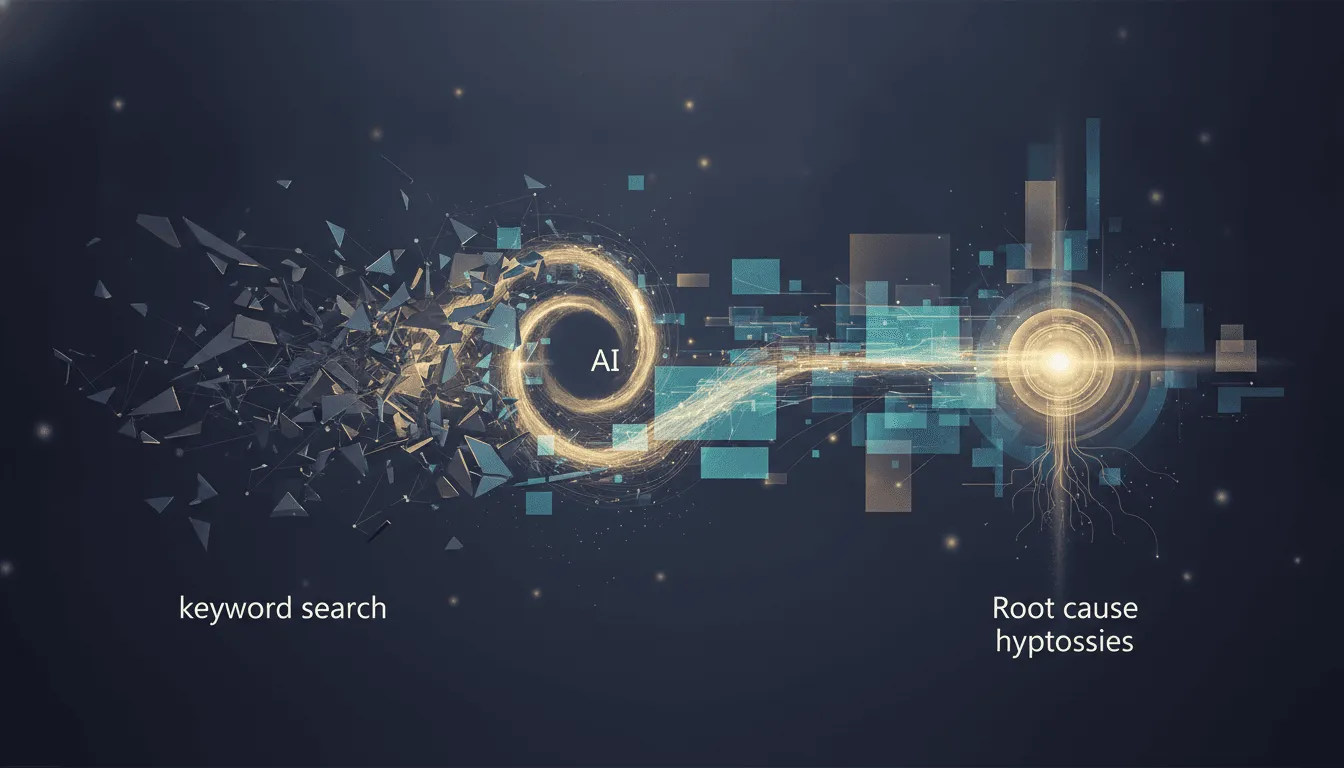
Artificial intelligence offers a way to automate the initial extraction phase. Natural language processing (NLP) models can scan large volumes of text—emails, tickets, transcripts—to identify potential requirements. They can detect common pain points, feature requests, and even implicit constraints by analyzing language patterns. With careful prompt engineering, teams can standardize the output format, producing user stories in the 'As a… I want… So that…' template or in a structured table with acceptance criteria. This AI user story generation can produce draft requirements in seconds, dramatically reducing time spent on the first pass. However, the quality of the output depends heavily on the clarity and completeness of the input. If the source material is vague or contradictory, the AI will reflect those flaws. Prompt engineering becomes a critical skill: teams must learn to craft instructions that guide the model toward consistent, actionable results. Some integrations allow users to provide examples or define taxonomies, further improving accuracy. Particularly for structured tasks like requirement extraction, smaller purpose-built models often outperform larger general ones, offering faster and more consistent results. The key is to view AI as a powerful assistant that accelerates the draft phase, not as a magical solution that replaces human analysis.
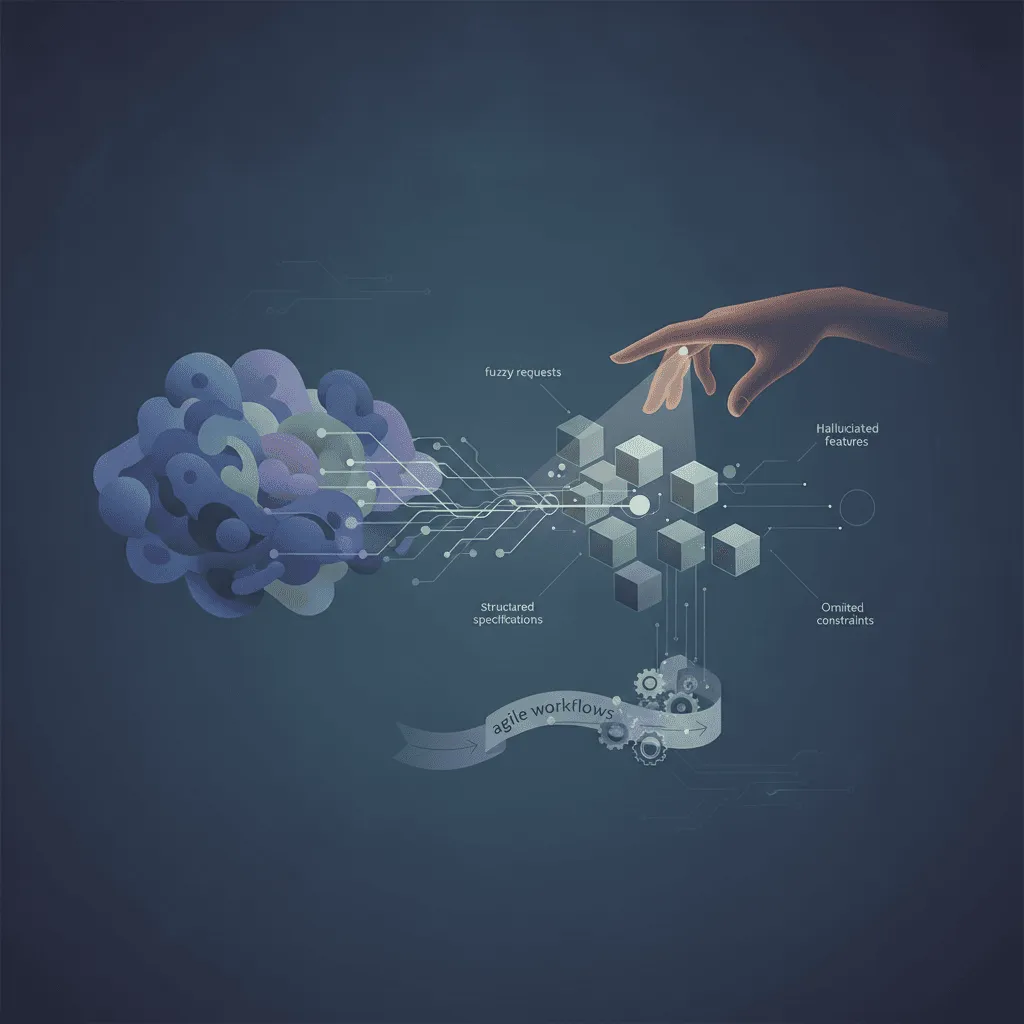
The speed of AI-generated requirements comes with new risks. Models can hallucinate features that never existed in the source material or omit crucial constraints like performance benchmarks or security policies. If teams treat AI drafts as final, they risk building products based on flawed assumptions—overfitting to data that may be incomplete or biased. This is why the human-in-the-loop model is essential. Each draft must be reviewed by stakeholders who understand the business context, technical feasibility, and user needs. Cross-functional reviews from engineering, design, and QA help catch blind spots that a single product owner might miss. Validation is not a single gate but an iterative process: review, refine, and re-prompt the AI with clarifications. The shift from autonomous AI to augmented intelligence is central to modern AI product management. As the industry moves toward viewing AI as a tool we control, the role of human judgment becomes more, not less, important. Teams that skip this step may find themselves with a perfectly structured requirements document that describes the wrong solution. The goal is to use AI to handle volume while humans handle meaning.
For AI requirement generation to become a practical part of daily work, it must integrate seamlessly with the tools teams already use. Plugins for Jira, Confluence, and Notion allow product managers to generate user stories directly within their project management environment. With a single prompt, an AI can turn a batch of support tickets into a prioritized backlog of potential features. These integrations mean teams can iterate on drafts without switching contexts, keeping the focus on collaboration. The single most important criterion for choosing an AI tool is how well it fits into a specific workflow. Effective integration also means the AI has access to context—component libraries, accepted vendors, past requirements—so its outputs align with existing conventions. This kind of requirements automation becomes seamless when embedded in the daily toolkit. The emphasis is on augmentation: AI handles the grunt work of parsing and structuring, while the team focuses on strategic decisions and stakeholder alignment. When integration is done right, the AI becomes an invisible assistant that streamlines the early stages of the development lifecycle.
The normalization of AI as a practical tool is already underway. After the initial wave of hype, the industry is focusing on targeted deployments that deliver measurable value. Smaller, less expensive models designed for specific tasks like requirement extraction often outperform massive general-purpose models in reliability and speed. The emphasis has shifted from flashy demos to systems that augment human work. For requirements engineering, this means AI is not about replacing the product manager but about amplifying their ability to process input. Teams that combine AI efficiency with rigorous human oversight will gain a competitive advantage, turning ambiguous user feedback into well-defined specifications faster and with fewer errors. As AI continues to evolve toward multimodal capabilities, the potential for even richer input analysis—integrating audio transcriptions and visual mockups—grows. But the core principle remains: AI is a tool we control, not a black box we trust blindly. The pragmatic future of requirements engineering is one where humans and AI work together, each contributing their strengths.